Saturday, June 7, 2014

Raising Funny Kids 43: Doodles

Joyfuldia Doodle Art


What child doesn't love to Doodle? 

Doodling is one of those natural activities that give us perspective on who we are and allows us to know ourselves one squiggly line after the other. As a Doodle comes to life, we feel competent and confident. As we work out the pattern, as we navigate the lines, circles, and waves, and begin to gain a sense of understanding about how much love, care and attention Doodles require. This natural recognition is then applied elsewhere. 

What is it about these wavy lines and circles that support and guide us as they navigate their way into being? 

The lines of self are woven into the design of the Doodle. As our Doodle comes to life, our self-knowledge increases and our self-confidence deepens. The paths we take in our Doodle seem random until at the end when they come together in a fun, interesting, or beautiful design that is not only familiar and comfortable, it is new. 

New in the sense that the Doodle itself is new. While we are present for each and every line stroke, each and every colored-in segment, it is the completed composition that we did not foresee, that we did not know existed until it did. 

What does it take to create a Doodle?

Even though there is an element of self-discipline required to create Doodles, the activity is one that puts us at ease with ourselves. Prepared to draw with felt markers of varying sized tips, or even just one marker, some artists, such as Matilda, "start out with a squiggle and then fill in the areas." 


Doodle Art
"It always turns out different than expected and I don't plan ahead." 


The Benefit of Doodling

The energy that goes into making a Doodle gives a child a sense of self-belief. Self-belief is fueled when the final composition is completed, but it is something that builds along the way. Children feel genuinely capable because they know in detail what it was they did right (which means they can do it again), because they have acknowledged the mistakes they feel they have made in one Doodle and now know how to avoid them (which means failures have been faced, not ignored), and because they feel certain that their Doodles are sure to please, they are ready to move onto the next Doodle, with a healthy mix of confidence and curiosity.

Doodling is not only an activity that allows us to know ourselves better, but it is also a relaxer, an activity through which extra energy can be channeled. Doodling appeals to both boys and girls (and adult boys and girls, too). There are no negative side-effects with Doodling. Parents, of course, want their children to grow up with good self-esteem. However, the foundation self-esteem does not develop without self-knowledge, sound relationships, and, of course, determination and perseverance.

Doodling encourages children to notice how details come together, which allows them to also notice other people's efforts. A child's awareness of the efforts of others often times leads them to comment favorably rather than be dulled by the noise of the world. When a child has had the experience of creating their own designs, they inherently recognize more possibilities.

Doodling a fun, healthy activity that children (of all ages) can enjoy. 


Amazing Doodles!!!


MUCHOS THANKS to Creative Blog for highlighting these Doodle Artists. 
For more Doodle Artists, visit their article:


Anyone wanna see more???
Me, too!


I had to sneak in a couple of my own Doodles! 


Friday, June 6, 2014

A Copic History of Art

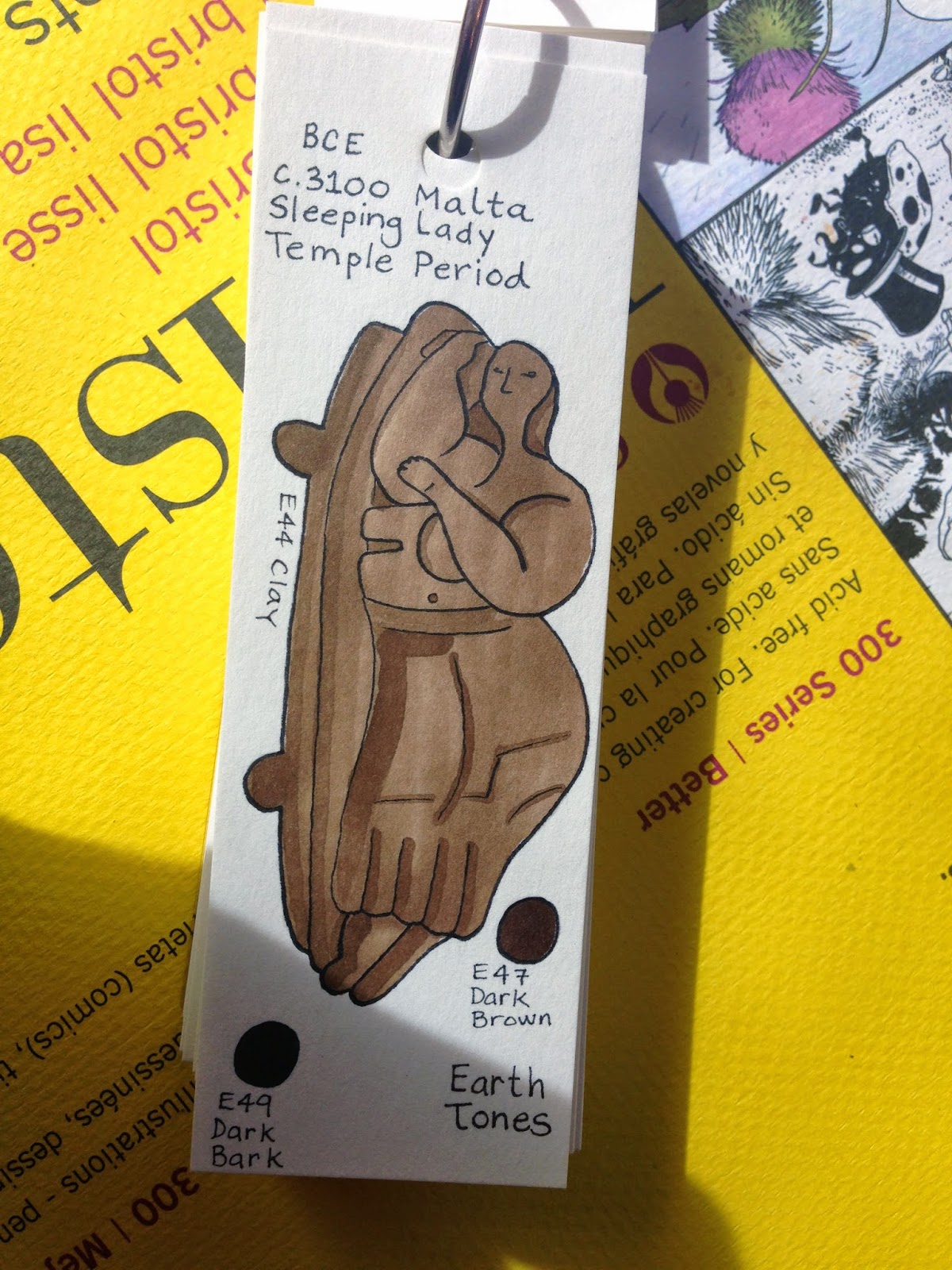
I recently began creating Copic Art History Flashcards for my daughter. I thought these quick little references would be a fun way to skim through the pages of art history. Each "Doodle" took me around 30 minutes to create.

The markers we utilize are called Copic Markers. I am familiar with a number of professional markers, but these are my favorite because they are numbered and labeled utilizing an intelligent system. For a colorblind artist such as myself, this is extremely helpful when choosing markers. 

Fortunately my daughter did not inherit my colorblindness, but nevertheless enjoys having the colors inked out on the Art History Flashcards, which make for a quick color reference. No longer does she have to continually open and test out the markers, wasting time and ink in search of the "right" color. 


Thursday, June 5, 2014

Public Art

"Public art punctuates our surroundings"
~Timothy P. Whalen, Director
Getty Conservation Institute

East First Street off First Avenue in Manhattan


My fascination with public artworks began as a child. Drawing flowers, buildings, cartoon characters, tic-tac-toe games, circles, squares, and any object that captured my attention or flowed from my tiny fingers. My chalk and I were great friends, and best of all, my family could wash the sidewalk off once I was finished. 

No one took photos of my chalk-works. Instead, my family came out to simply admire my creations, while my friends came out to actively participate in the hopscotch games I had sketched. My hopscotch chalk-works were comprised of more than simple boxed squares and numbers, they had borders, flowers, and characters hanging off the sides as if falling through the ground. 

The temporality of the experience left a marked impression on my mind, one that I interpreted as art is something to create, again and again, for the sole purpose of entertaining oneself and others.


Unlike the artworks that are housed in the controlled environments of museums, public artworks interact with the world at large. Ephemeral in nature, their focus is to delight, surprise, communicate or engage with those who come upon them. 

The natural tendency to artistically express ourselves dates back to prehistory when our predecessors drew on cave walls, on the sides of caverns or mountains, across vast valleys, on pottery, on fabrics, and on themselves. The tendency to create outside oneself is inherent. Whether creation occurs within the confines of an art studio or on the sidewalk of Italy's Piazza, the autodidactic tendency to express oneself through works of art is abundant and shared across cultures, landscapes, and eras. 

Cueva de las Manos (Cave of Hands) 
13,000 - 9000 BCE
Argentina


Despite the freeing and inherent nature associated with creating public artworks, there are many conservation issues associated with outdoor painted surfaces, sculptures and murals. The properties and behaviors of paints used, human activity. The power of climate and decay affect art, contributing to the temporality of it when it is not preserved by modern art conservators. Philosophically speaking, public art requires us to pause and reflect whether or not these works of art should be preserved, or if they should just be washed away like the chalk drawings of my childhood. 


Ethics of Conservation

Ethics, dating back to the time of the ancient Greeks, is primarily concerned with 'How one should live one's life.' While this personal reflection is related to moral behavior, implicit is the question of how human beings should relate to one another. 

If the modern world has taught us anything it is how fundamentally we affect one another's lives. Our relation to our contemporaries, our descendants, and our environment bring up questions of sustainability, which reflects our concern for preserving art for future generations. Of course, there is the counter that what is touched by humans is devalued (Colwell, 1989), suggesting that only what is wholly natural is truly irreplaceable and therefore worth every effort to conserve. What humans have shaped they can shape again, thus destruction matters less (according to some). 

Nature renews itself despite human assaults, artistic assaults, included. While the ethics of conservation with respect to public art are debatable and in their infancy in terms of defined practices, artists who feel compelled to create public art and well as those who enjoy viewing public art share aesthetic concerns. If we did not, we would not take offense to neighbors who fail to mow their lawn, or to individuals who litter and/or deface public buildings. 


Enjoying Public Art

"Wilderness is the raw material out of which man has hammered the artifact called civilization" (Leopold, 1949). With this being said, the high value industrialized societies place on art is evident in the fact that many buildings are preserved due to the artwork adorning the often times dilapidated walls. It is the artwork or provenance that is of great importance, especially to the owner. There are a number of reasons why provenance is important, in particular in a piece of art's relationship to other artworks. If the artist becomes well-known, if the owner of the property is well-known, or if the location is of historical significance, the provenance becomes more highly valued.


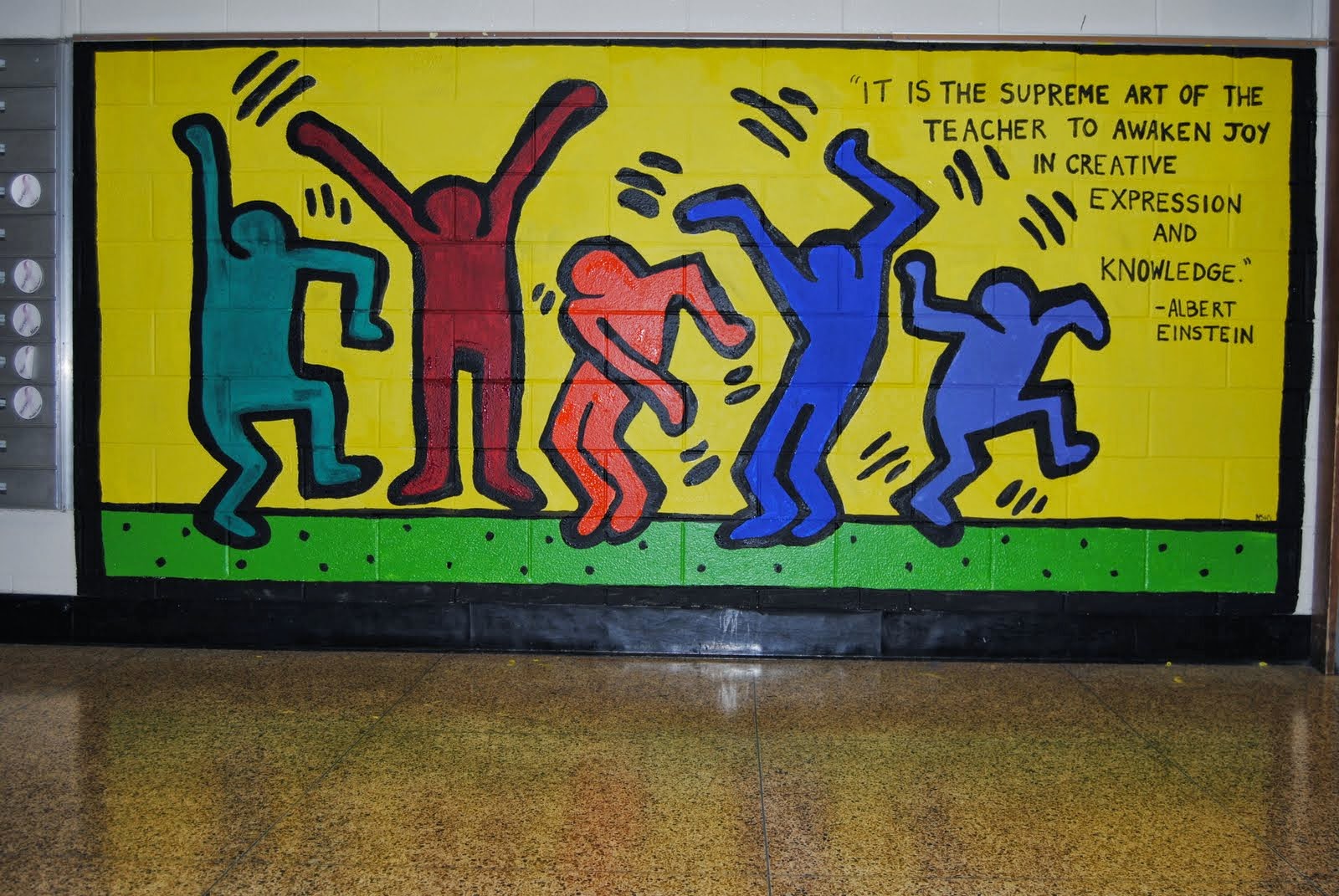
The quality of the provenance of a public work increases its selling price as well as public interest in conservation and preservation. Tiled walls in the subway graffitied by Keith Haring, for example, might be considered by some as historical landmarks, a categorical distinction above public art. Courts establish precedents that establish significant legal principles involving the distinguishing of a historical landmark, affirming the importance of public interest in historic preservation. 

Moai Statues
1250 - 1500 CE
Polynesia's Easter Island


Here, we return, once again, to the ethics of conservation: preserving public art for future generations. The constitutional framework created by public opinion fosters a remarkable blossoming of historical preservation as a major tool of urban land use. As a species, as a culture, we "like" our public art. We enjoy making it. We enjoy viewing it. We strive to protect it for others to view and enjoy. 

When we see a piece of public art that we love, in addition to photographing it, in addition to concerning ourselves with conservation issues, our primary concern should be personal enjoyment. To sit there and soak it up, to truly "take it in" and experience the art, this is what most agree is important.


Art is all about the experience, the artwork is simply an artifact of that experience.  


Tuesday, June 3, 2014

Being Right About Being Wrong


Errant beliefs are not simply about factual matters, they are about concepts, including what it means to be wrong.


In the television show, The Big Bang Theory, in the episode "The Hofstadter Isotope," Sheldon Cooper discusses the nature of "wrong" with comic book store owner Stuart:

Stuart: Ooh, Sheldon, I'm afraid you couldn't be more wrong.

Sheldon: More wrong? Wrong is an absolute state and not subject to gradation.

Stuart: Of course it is. It's a little wrong to say a tomato is a vegetable. It's very wrong to say it's a suspension bridge.


Are there degrees of wrong? 

If you agree with Sheldon, then you believe that there cannot be degrees of falsehood. Sheldon claims that "wrong is an absolute state," but fails to follow up that claim with anything new. He simply rephrases his position.

Stuart's view, on the other hand, relates to scientific exploration as science gets closer and closer to uncovering new natural truths (i.e., whether loop quantum gravity or string theory bests explains the physical world). Thus, when we talk about a tomato being a vegetable, we are closer to the truth than when we talk about a tomato being a suspension bridge. Again, it is all a matter of 'closeness.'


Often times we hear the expression "There's some truth in that," or "That's closer to the truth."

If truth can be measured in degrees, so too can falsity. In all reality, "A tomato is a suspension bridge" is no more wrong than "A tomato is a vegetable," but the second claim seems closer to the truth.

But, Why?


Some philosophers refer to the "possible worlds" theory to answer this question. A possible world is a way of explaining what a thing could be or could have been, even if things are not really that way, whatsoever. For any statement, either it or its denial is included in a possible world's scenario.

For example, there are no possible worlds in which a tomato is and is not a suspension bridge. In some possible worlds, however, a tomato may not be a vegetable. Of course in our world - in the real world - where a tomato is a vegetable, a tomato being a vegetable and not a suspension bridge represents actuality and not fiction (although, admittedly, the idea of a tomato being a suspension bridge is quite entertaining... it reminds me of James and the Giant Peach, in which a peach is a ship).


In reality, Stuart's refutation shows Sheldon that being wrong is subject to gradation. This graduation is exactly what Stuart offers with his suspension bridge example. If you can give even one (true) refutation, then logically speaking, you've just won the argument.

Being right about being wrong is right up a philosopher's alley, even if the concept, itself, is wrong.


Sunday, June 1, 2014

In Search of Beauty


InnocÄ“ns (2014)
Soph Laugh
Private Collection


Art is inherently artificial. Ink, paint, markers, pencils are artificially bounded; their elements are artificially selected and arranged; their appearance is artificially maintained. The universe naturally moves toward disorder, and art collectors must expend energy in working against this. Depending on the conditions in which art is stored, the job of the art collector may be easier or more difficult. In hot, arid areas, such as Iran, for instance, preserving art in a cool, pleasant space is a challenging task. There is a stark contrast between the inside and the harsh reality of life on the Iranian plateau. Like with her gardens, "the walls are flowers, fruit, shade, water and life." (William L. Hanaway, Jr., "Paradise on Earth: The Terrestrial Garden in Persian Literature"). 

Because of the harsh Persian climate, collecting artworks there demands more energy than it might in a temperate, fertile land. Like art, the Persian garden is artificial in its design as well as in its collection of elements. 

Though the constituents of a piece of art come from nature (pigments, egg tempura, sandstone, etc.), they are artificially arranged and maintained. In preserving artwork, the custodian imposes his or her will on disordered nature in a way that is pleasing both both critic and viewer, alike. 

The purpose of every piece of artwork is to engender sensual pleasure. Artistic elements stimulate the senses. Each of the artwork's component parts, as well as the whole arrangement, are visually stunning. The best pieces of artwork, it is said, stimulate the sensation that one is in the presence of beauty. Sensual delectation, however, is not the only kind of pleasure artwork affords. The artificially crafted work of art also engenders aesthetic excitement. While all artworks are artifice, the best artworks are works of art. 

Oscar Wilde writes: 

The more we study Art, the less we care for Nature. What Art really reveals to us is Nature's lack of design, her curious crudities, her extraordinary monotony, her absolutely unfinished condition. 

... It is fortunate for us, however, that Nature is so imperfect, as otherwise we should have had no art at all. Art is our spirited protest, our gallant attempt to teach Nature her proper place. 

(Oscar Wilde, "The Critic as Artist, Part II.")

By Nature, Wilde means "natural simple instinct as opposed to self-conscious culture," which is Art. 

Visus (2014)
Soph Laugh
Private Collection


Art is a careful selection and arrangement of elements designed to produce a profound effect on the viewer or beholder. While admittedly some consider a random torrent of paint a painting, a chaotic splattering of dried pigment an artwork, the choice and arrangement of these elements contribute to the aesthetic enjoyment of the artwork. 

Viewing art appeals to our 'sixth sense' which responds to what is aesthetically pleasing. This is what Wilde refers to when he writes, "There is in us a beauty-sense, separate from the other senses and above them..."

Artwork is emphatically described as a collection, which implies artificiality; there are no pretensions to spontaneous assembly of an artwork's elements. Paint does not just spring forth from the canvas; in early artworks paint was made with the yolk of eggs, which would harden and adhere to the surface to which it was applied. Pigment was made from plants, sand, and different soils. Later on, pigments and oil mixtures were ground into paste with a mortar and pestle. Today, most painters purchase their paint from tubes. Due to the shortage of linseed oil in the wake of WWII, artificial resins, or alkyds, were invented. The point here is that while paint today is inexpensive and easy to make, it does, however, as it always has, required that the artist obtain it. 

Although museums and galleries house an extraordinary variety of artworks, no one gallery can include every artwork in existence. Instead, the curator carefully selects each piece for the collection with judgment and discriminating taste. The chosen collections are separated from the world of the artist and displayed with inscriptions. Artworks are arranged in an orderly design within the housing institution. For instance, most works are placed at a distance from one another to stimulate the visitor's sense of sight. With explosive color, visible order and elaborate planning, collections of artwork are artfully displayed, the design a work of art in itself. 

Each work of art in an institution conveys that its careful assemblage of well-transformed elements were crafted by an artist with an unfailing sense of human beauty. These enchanted works of art are incarnations of the enchantment we experience when in the presence of beauty. Ingenious craftsmanship goes into their creation, and they are rendered with the same close attention to detail that characterizes the beautiful objects they represent. 

InnocÄ“ns (2014)
Soph Laugh
Private Collection


Throughout history it was universally accepted that visual beauty led to love. Images predominate and underline the idea that love begins with sight. With respect to the female artifice in the above image: her features are sculpted: she has a straight, well-made nose... the neck of the head from which she gazes out at the viewer is of good proportion, thick enough and reasonably long... the forehead is high and svelte... her face is "white and colored", painted rather than naturally existing, implying that her beauty results from a carefully designed arrangement of beautiful component features. The space between her eyes is not small but proportional in measure. All these descriptions emphasize the superficial. She is staring at us from within a silhouette, an aspect of her charm. Based on this superficial appraisal of her beauty, we can conclude that she has a "gracious" or "innocent heart" and leads a "good life"; moreover, we follow her inside the head. 

Not only is this beautiful woman and the silhouette scrupulously crafted, but the artificial order reveals its artifice. Inevitably, the beholder wonders who is responsible for creating the artifice that leads us to bestow sentiment upon her. Surely she does not exist, but did she once exist? Is this depiction one of an actual woman? 

Like all art, explicit artifice characterizes the experience. Our reaction to art is a complex mechanism by which our ideals retain their purity. The images are always fresh and new, glowing with colors as red and pure as the best that Nature can produce. Placed on a canvas with great skill, one paint layer after another, the image comes to life before our very eyes. 

Art delights the senses. While the women often depicted in artwork are visions of loveliness: artificially designed to delight the senses, they are meant to arouse pleasure. 


Visus (2014)
Soph Laugh
Private Collection


Artworks are artificial even though they utilize materials found in nature. In modern vocabulary the word nature denotes that which exists spontaneously and organically without external human interference. When I state that artworks utilize materials found in nature, I am essentially undermining the modern opposition between nature and artifice. Nature is that mysterious artificer who creates the materials that incite our love for the artificial. Appropriately what Nature creates leads to procreation, creating circumstances to ensure that production brings something new into being. This is what makes art so luxuriously sensual, and artwork so irresistibly beautiful. 

Beautiful things please the eye, engage the rest of the senses, and make reasonable people unable to resist falling in love with them. Visible beauty leads directly to love, which continues the species. To ensure that procreation will occur, Nature crafts beauty (and materials from which beauty can be crafted) that ravishes the heart. 

Love begins with sight and proceeds to engage the rest of the senses, one by one. Love of art clearly begins with sight. Vision begins the progressive pleasurable engagement of the senses arising with the heart of the art aficionado a desire to possess art. This is why collectors ultimately pay millions of dollars for works of art. The drama for this experience was set out in Eden as the paradigmatic sin: man's desire, inflamed by a beautiful sight, which seduces his reason. This sounds suspiciously similar to a collector's flawed rationale for the foolish amounts of money spent on art that could be spent on saving lives. An art collector reenacts the fall when he falls in love with a piece of artwork, when the artwork becomes the apple of his eye. 

InnocÄ“ns (2014)
Soph Laugh
Private Collection


While the descriptions of the Garden of Eden alert the Christian reader that artwork's beauty is not to be trusted, secular readers recognize the perils of iconography. 

Despite our obsession with artworks, art performs a lovely service: it speaks to us in ways that fill our hearts with great joy when we see it. 

Artworks are the temptress sirens of antiquity, but nevertheless we continue to enjoy and pay homage to their beauty. All the warning bells the word "siren" conveys fail to deter our search for beauty. We know iconography is dangerous, we simply choose to ignore it. 

Our awareness of our own Narcissus-like behavior makes clear to us that should we gaze innocently into the fountain of the fair Narcissus, we may indeed suffer his misfortune. We, too, may become transfixed upon what we see. 

The logic of Nature's beauty reflects the paradox of her relationship with Reason, but that is a story for another day.