Saturday, January 19, 2013

Snowing in Paris


It's snowing in Paris! The romantic pink hue that we ascribe to Paris has been brushed by the color of angelic purity. Even the new curse words I've learned in French are coming out clean. 


The snow's ubiquitous influence is felt by everyone as they scurry from their apartments to the Boulangerie this morning. Swiping my hands along our snow-covered car, I delight in the stark difference between the snow's soft image and its icy distinction. 


There's an almost translucent, radiance outside that makes the streets of Paris seem as if they are glowing with white magic. Even little white lies are adorable in this kind of weather. 


Increasing awareness of, curiosity about, and imperative to go out and play in the snow has led to the 15 layers of clothing I'm wearing, just to go outside. 


Just kidding! These beauties would get ruined in the snow... 
In reality, I'm stuck wearing these boots:


With hand warmers stuffed into my gloves, and feet warmers tucked inside my boots, I'm ready to go out and uncover the invisibility of this white ubiquity. The snow provides an excellent provocation to go make tracks through theories of purity and goodness that defines the color white.  


Separating the lexicon of race from the color white allows us to formulate a sketch of what the concept "white" circumscribes. Reflected in its connotation are the concepts of stainless, spotless, unstained innocence. A pristinely clean, pure environment or concept. 


Eagerly, I prepare myself to go out and brave the snow-covered streets of Paris. With music from my iPod as an accompaniment, the warmth and aural dynamics from the bakeries beckon me inside. There's nothing like sitting in a café with a freshly baked, flaky croissant, a cup of coffee, and Le Monde to soothe the mind. 


While I sit here intellectualizing the deeper significance of a snow day in Paris... with my iPod, my new snow boots, MacBook Pro, and an all around aesthetic coolness, I find myself carried away by the beauty of it all. 

(Fia in her new snow outfit!) 


The Paris I've come to know and love has taken on a new meaning today. It's a soft, cool, nostalgic experience that most definitely deserves the 30 minutes I just spent writing this post... 


Tuesday, January 15, 2013

The Mimetic Art of Wile E. Coyote


There are many Greek stories recounting the mimetic theory of art. Perhaps the least known is that of Wile E. Coyote, Supergenius. 


Wile E. Coyote (also known as "The Coyote"), while know for his elaborate plans to pursue The Road Runner, much to our chagrin, has not yet been recognized for his contribution to mimetic art. 


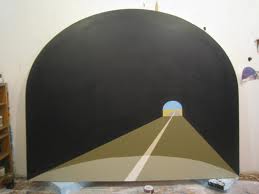
His ability to depict realistic tunnels on mountain sides went unnoticed until now. Wile E. Coyote painted tunnels that were so realistic that The Road Runner ran right through them. 


While the Roman writer Pliny the Elder (CE 23-79) gave an account of the Greek legend of the invention of drawing, in his Natural Histories, whereby... 

the Maid of Corinth's lover was departing to go and fight in a distant war, she noticed how his shadow had been cast by a candle on the wall of their room. She picked up a piece of charcoal and drew around the shadow, and created a perfect likeness or mimetic image... 

It was Wile E. Coyote who really brought home the question of what art does, and how it represents the world as we know it. 


The Coyote's tunnels are a faithful mimetic reminder of what it feels like when we get fooled or tricked into thinking something's real when it isn't. 


Sunday, January 13, 2013

Einstein's Fish


Variations of this riddle appear on the net from time to time. It is sometimes attributed to Albert Einstein and it is claimed that 98% of the people are incapable of solving it. Some commentators suggest that Einstein created such puzzles not to test out intelligence but to get rid of all the students who wanted him as an advisor. It is not likely that there is any truth to these stories. Where ever this comes from, it is a nice riddle.
Let us assume that there are five houses of different colors next to each other on the same road. In each house lives a man of a different nationality. Every man has his favorite drink, his favorite brand of cigarettes, and keeps pets of a particular kind.
    The Englishman lives in the red house.
    The Swede keeps dogs.
    The Dane drinks tea.
    The green house is just to the left of the white one.
    The owner of the green house drinks coffee.
    The Pall Mall smoker keeps birds.
    The owner of the yellow house smokes Dunhills.
    The man in the center house drinks milk.
    The Norwegian lives in the first house.
    The Blend smoker has a neighbor who keeps cats.
    The man who smokes Blue Masters drinks bier.
    The man who keeps horses lives next to the Dunhill smoker.
    The German smokes Prince.
    The Norwegian lives next to the blue house.
    The Blend smoker has a neighbor who drinks water.
The question to be answered is: 
Who keeps fish? 

This is a simple constraint satisfaction problem.  Let us start by defining a regular language that consists of all the possible solutions for the puzzle. We need five basic variables: Color of the house, Nationality of the owner, and his favorite Drink, Cigarette, and Pet. We define each variable as the language of the possible values of the variable.
    define Color [blue | green | red | white | yellow];
    define Nationality [Dane | Englishman | German | Swede | Norwegian];
    define Drink [bier | coffee | milk |tea | water];
    define Cigarette [Blend | BlueMaster | Dunhill | PallMall | Prince];
    define Pet [birds | cats | dogs | fish | horses];


The next concept to define is that of a House. Let us construe it as a concatenation of the five terms defined above:
    define     House     [Color Nationality Drink Cigarette Pet];
With five variables each taking one of five possible values, this gives quite a number of possible households, 5x5x5x5x5 = 3125, to be exact. A road with five houses next to each other, House^5, provides an astronomical number of possible combinations of colors, nationalities, drinks, cigarettes and pets.
To solve Einstein’s puzzle, we represent each of the fifteen constraints as a regular language and intersect these languages with the initial set of all possibilities. If all goes well, at the end we will know who keeps fish. For example, we can interpret The Englishman lives in the red house. as $[red Englishman]. This constraint is trivial to encode because in our representation of a house, the color and the nationality are adjacent. The second costraint, The Swede keeps dogs could be represented as $[Swede Drink Cigarette dogs] but we will choose a less verbose formulation, $[Swede ~$Pet dogs], that does not explicitly list the variables that separate Nationality and Pet. The fifteen constraints are shown below.
    define     C1     $[red Englishman];
    # The Englishman lives in the red house.
    define     C2     $[Swede ~$Pet dogs];
    # The Swede keeps dogs.
    define     C3     $[Dane tea];
    # The Dane drinks tea.
    define     C4     $[green ~$Color white];
    # The green house is just to the left of the white one.
    define     C5     $[green ~$Drink coffee];
    # The owner of the green house drinks coffee.
    define     C6     $[PallMall birds];
    # The Pall Mall smoker keeps birds.
    define     C7     $[yellow ~$Cigarette Dunhill];
    # The owner of the yellow house smokes Dunhills.
    define     C8     [House^2 ~$Drink milk ~$Drink House^2];
    # The man in the center house drinks milk.
    define     C9     [? Norwegian ?*];
    # The Norwegian lives in the first house.
    define     C10     $[Blend ? ~$Pet cats | cats ~$Cigarette Blend];
    # The Blend smoker has a neighbor who keeps cats.
    define     C11     $[horses ~$Cigarette Dunhill | Dunhill ? ~$Pet horses];
    # The man who keeps horses lives next to the Dunhill smoker.
    define     C12     $[bier BlueMaster];
    # The man who smokes Blue Masters drinks bier.
    define     C13     $[German ~$Cigarette Prince];
    # The German smokes Prince.
    define     C14     $[Norwegian ~$Color blue | blue ? ~$Nationality Norwegian];
    # The Norwegian lives next to the blue house.
    define     C15     $[Blend ~$Drink water | water ? ~$Cigarette Blend];
    # The Blend smoker has a neighbor who drinks water.
All that we need to do to solve the problem is to impose the constraints on the row of five houses by intersection. The solution below is almost correct.
    define     Solution [House^5 & C1 & C2 & C3 &C4 & C5 &
                     C6 & C7 & C8 & C9 & C10 &
                     C11 & C12 & C13 & C14 & C15];
The result is a network with five paths. In four of the solutions nobody keeps fish and the German keeps the same kind of pet as someone else. We need one final constraint, presupposed by the question Who keeps fish?:
    define     C16     $fish;
    # There is someone who keeps fish.
With C16 added, only one solution remains. To make it easier to see, we compose the solution with the transducer that adds some prose around the pieces along the one remaining path:
    define     Describe     [House -> "In the " ... .o.
           Color -> ... " house " .o.
           Nationality -> "the " ... " " .o.
           Drink -> "drinks "... ", " .o.
           Cigarette -> "smokes "... "s,\n and " .o.
           Pet -> "keeps " ... ".\n"] ;
We can now see the solution!


    regex [Solution .o. Describe];
    76 states, 75 arcs, 1 path.
    xfst[2]: print lower-words
    In the yellow house the Norwegian drinks water, smokes Dunhills,
      and keeps cats.
    In the blue house the Dane drinks tea, smokes Blends,
      and keeps horses.
    In the red house the Englishman drinks milk, smokes PallMalls,
      and keeps birds.
    In the green house the German drinks coffee, smokes Princes,
      and keeps fish.
    In the white house the Swede drinks bier, smokes BlueMasters,
      and keeps dogs.
In short, it’s the German who keeps fish.

Saturday, January 12, 2013

Steampunk Statue of 2013


Steampunk Statue of 2013

At Paris the XIII day of January...

The statutis ordinanceis to be obseruit be all the maister steampunkers within this realme, Sett doun be Soph Laugh, Maister of Steampunk Wark, to the European Union And generall Wardeine of the said craft, with the consent of the maisteris efter specifeit. 

Item, first that thay obserue and keip all the gude ordinanceis sett doun of befoir concernyng the priviligeis of thair Craft be thair predicesso of gude memorie, And specialie 

That thay be trew ane to ane vther and leve cheritablie togidder as becumis sworne brether and sester and companeounis of craft. 


Item, that thay be helpful to thair fellow maisteris in all thingis concernyng thair craft. 

Item, that they be honest, faithfull, and diligent in thair calling, and deill uprichtile w' the maisteris that they sail tak vuoun hand, be it in task, meit, & fie. 

Item, that name tak vpoun hand ony wark gritt or small quhilk thay have no' abill to performe qualifetlie vnder the pane of fine or ellis the fourt pairt of the worth and valor of the said wark, and that by and attor ane condigne amendis and satisfactioun to be maid to the maister of the wark at the discretioun of the generall Wardene, or in thair absence at the sycht of the wardeneis and maisteris of the quhair the said wark is interprisit and wrocht. 


For more, inquire within. 


Friday, January 11, 2013

Spontaneous Laughter


This is my son. He is a goofball! Since he was little, he'd whip out something ordinary and use it in an extraordinary way to get a rise out of others. Whether his jokes make sense or not, his spontaneity captures our attention every time. 


In philosophy, as in other sciences, the categories we examine are weighed toward reflection and away from spontaneity. But a moment of spontaneity, as a concept, is one we can experiment with parallel to other moments of reference in order to afterward envision a philosophy of spontaneous laughter, an eruption of laughter that escapes, seemingly from out of nowhere.

A Funny Moment in Statu Nascendi


But how does a spontaneous moment erupt? From where does it come? And where does it go? For anything to exist it has to first come into being, then occupy a particular position or perceived location, and finally, this position must be supported by a surrounding medium or structure, an environment or material in which it can develop. 


The nascence of spontaneity feels like a boost of creative energie that propels us further and faster along what we ordinarily consider normal time space movement. This spontaneity nearly immediately fills the mind with creative agents before the spontaneous moment itself reaches our conscious awareness of it.


The contrast between courteous, conscientious, or guided laughter and spontaneous laughter or action lies in our different treatments of the moment. The former endeavors to present itself before all other moments, whose 'moments' are defined by the extra-momentary character that goes into making them. Conventional thought and action has its metaphysics in a time already past, outside the precincts of our mind's stage.

A spontaneous moment presents things only as they are at the moment of eruption.


The key to expressing humor lies in guiding a moment of spontaneous laughter for others; the key to enjoying humor lies in experiencing this spontaneity for ourselves.

Spontaneity has a time and a place!


1st Roman Soldier: "What time is it?" 
2nd Roman Soldier: "XX past VII."


Time Travel Researcher: "Excuse me, what time is it right now?
Assistant: "It's 11:30 a.m."
Time Travel Researcher: (puzzled look on his face) "You know, it's the spookiest thing, I've asked that question thirty times today, and every time someone gives me a different answer." 


Social Worker 1: "What time is it?" 
Social Worker 2: "Sorry, I don't know. I don't have a watch." 
Social Worker 1: "No worries. The main thing is that we talked about it." 


Son to his Mother: "Mommy, why do you still wear a single function device?"
Mother: "To save time."


A man at Charles de Gaulle airport is waiting for his flight that leaves at 9 a.m., but he has forgotten his watch. So he looks for someone to ask the time (apparently he forgot his glasses, too, and couldn't look up at the display on the wall). He spots a guy carrying two suitcases and sporting a fabulous hi-tech watch, so he asks him for the time and the guy replies: 

- Sure, for which country? 

- For how many countries does it tell time?

- All the countries in the world!

- Wow! That's pretty cool. 

- That's nothing, this watch also has GPS, Internet, Cloud, and 150 other features I haven't even learned how to work yet. I can even stream Call of Duty on it! 

- That's incredible! I need to get one. I see people streaming their music and videos all day long, but video games, that's amazing! 

- Well, actually, the novelty has worn off for me and I don't really have time to play video games. If you really want it, I can let it go for $500.

The watchless traveler whiped out his checkbook and wrote him a check for $500. The seller takes off the watch and hands it to him. 

"Congratulations, here's your new watch." 
Then, handing the two suitcases over as well, he says, "And here are the batteries that go with it." 


Thursday, January 10, 2013

Raising Funny Kids 16 - Cultural Edification


In the United States, cultural edification for kids has been the least successfully cultivated of all the departments of speculative sciences. The age of Technology is too intent upon its immediate tasks, and too completely absorbed in its newest updates, to pause reflectively over the history of its own creative or ingenius working. 


Cultural edification has for its object the wide domain of human ingenuity, or more precisely, the entire history of human ingenuity. 

Exploring the world through the discovery of artifacts and objects of worth in their relationship to ourselves and society is the ultimate children's story. 


When seeing a new painting or object of worth, the creativity we apply to understanding it evokes the feeling of wonder within us; this is where the fun lies. We can play games with ourselves (and our children) that help us delve deeper into our philosophies about any manmade object, irrespective its origin or distance from our own life experience. 


Our first impressions, unbiased by theory or context, allow us to experience the world for ourselves. After which, we are intrigued by the theories of others (as they relate to art, religion, sociology, or the nature of the material universe) because we've had the opportunity to FIRST formulate our own memory or experience of something. 


Whether you travel the globe to culturally edify yourself (and your children) or choose a location closer to home, getting out of the house "to go off exploring" is every bit as educational as traditional educational approaches whereby primary emphasis is placed on quantity of information rather than quality or synthesization (of it). 


Traveling (and exploring our surroundings) for the distinct purpose of cultural edification not only makes for wonderful family memories, but also for wonderful family photos. 


Instilling within our children an aesthetic appreciation of works of art, with knowledge of the historical circumstances conditioning their production, when undertaken with consideration and insight, supported by meticulous historical documentation (and a little creative imagining), is a particularly unique, thoroughly enjoyable hands-on method of parenting a future global citizen. 


It's nearly impossible for most people to learn how to communicate in every language, and also to travel to every country in the world whereby they can communicate with locals in meaningful dialogue about what is important to other cultures. It is for this reason that we can look to our common global history as seen through objects of worth. 


From abstract principles to concrete productions coming from insight or talent, this mode of examining the world distinguishes itself from the present educational systems which are falling apart faster than I can write this post. 

Considering the trajectory of what we're building today as it relates to what we've made in the past demonstrates the universality of our species' desire to create objects outside ourselves and - with the advent of modern medicine and technology - inside ourselves, too. 


A determining principle of edification is our understanding of self with respect to our own inwardness as well as to our place in the growing world community. Whether or not we ascribe spiritual meaning to material form is an inward permeation not discussed in this post. However, what constitutes a whole in education is our understanding that individuality is a human passion, action and event; the wide domain of human feeling can be found in objects we've created. 


These objects are on exhibits around the world in varying modes of formative expressions (paintings, sculpture, jewelry, tools, music, instruments, letters). It is my belief that education is meaningless and devoid of understanding until we leave home - so that we can explore, ask questions, make observations, have experiences, and finally, when all is said and done, come up with a few theories of our own. These naturally derived theories are far more meaningful to me (and dare I say to many others) than are the theories of those held by (educated) strangers. 


I enjoy seeing the world from my own eyes rather than through the digital lens of a film maker. You just never know what you're going to discover about the world - or yourself - when you leave home. 


Classification, clarification, and organization can occur within the confines of walls (libraries, schools, research laboratories), but the content is usually outside these walls, without which we'd have nothing to classify, clarify, and/or organize or synthesize into meaningful textbooks. 


Go outside and become a part of living history. Walk in the footsteps of those famous persons who came before us, climb pyramids and cathedral stairs, delve deeper into the symbols and significance of historical objects of worth, and most importantly, formulate (and allow your children to formulate) their own opinions about the world and their place in it - this is the role of an educator: guiding others to knowledge where they can, for themselves, formulate a personal opinion based on a unique, meaningful experience with the topic at hand. 


Monday, January 7, 2013

Send A Virtual Hug


♡  Lucky you! ♡  

You have just received a virtual hug! Feel free to share this with your friends who might appreciate receiving a little gift in their email box today. 

♡  Question ♡ 

Will sending virtual hugs to others make you (and them) feel happier? Can you send a virtual hug to yourself and actually smile and feel a bit warmer inside? (Try it!)  

Perhaps you would not hesitate to answer this question with a resounding, "Yes!," thinking of these cute little gif images above. 

How darling is the little girl who opens a box and gets the Giant Sparkly Star! And isn't the virtual hug adorable? Look - it's loading....ahhhh, how cute

"I had a pleasant time with my mind, for it was happy."
Louisa May Alcott, novelist
(◕。)


According to John Stuart Mill (1806-1873), happiness can be defined as the greatest degree of pleasure for the greatest number of people. Mill called this principle utilitarianism.

Happiness is a human quality to be realized, nurtured, and shared. While not all pleasures are identical in value, happiness seems to be the most desirable of them all. 

In exploration of what makes us and others happy, I am sending out a Virtual Hug to the World to see how many people it reaches, but more importantly, I am sending this out with the hope that the mere idea of a hug can bring a smile, a giggle, or simply a warm hearted feeling for any heart who needs it. 

My happiness as well as the happiness of others is of great interest to me. Thanks for visiting!