Showing posts with label Positive Psychology. Show all posts

Tuesday, October 22, 2013

Contentment: A Progressive State


            Contentment is defined as a state of happiness and joy that comes from having reached a state of satisfaction. While it has been argued that this state of satisfaction could impede one’s growth, the counterclaim is instead a logical fallacy of correlation versus causation.


            Phrenological mapping, a classic case of correlation versus causation, is a pseudoscience that rose to popularity in the late 18th century. Developed by German physician Franz Joseph Gall in 1796, phrenology purported that (based on the concept that the brain is an organ of the mind) certain brain areas have localized, specific functions or modules. Today regarded as an obsolete amalgamation of primitive neuroanatomy with moral philosophy, the belief that contentment impedes one’s growth or progress is equally primitive in its understanding of “state” with respect to movement versus repair and maintenance.


            Where propositions are said to be true or false, states are said to obtain or not. In this respect, the proposition that satisfaction is not present in movement, which is associated with progress, is false. In order to support the claim that contentment is an inhibitor to progress, one must assert the following propositions:

  • ·      For progress to exist, movement must be present.
  • ·      Movement is not present in satisfaction.
  • ·      Therefore, satisfaction cannot exist in progress.

           
Let us consider the first two propositions:

            “For progress to exist, movement must be present.”  With respect to movement patterns in spatiotemporal data (data belong to both space and time or to space-time), the nature of progress involves movement from one space in time or state to another. Discovery and learning are direct results of movement from one state to another. As new information is presented, processing occurs. This processing is what one might call progress or expansion to include new information. In this respect, I would agree with the first proposition.


            “Movement is not present in satisfaction.”  Over the past few decades, ‘positive psychology’ has put the notion of ‘happiness’ at the forefront of scientific and psychological research. Such happiness is often described in terms of contentment or ‘life-satisfaction’, and is measured by means of self-assessments.

            Historically, desire theories evolved with the emergence of welfare economics. Pleasure and pain are inside people’s heads, thus economists began to see people’s well-being consisting in the satisfaction of preferences and desires, the content of which could be revealed by the person experiencing the state. The ranking of preferences gave rise to the development of ‘utility functions’ for individuals, and methods for assessing the value of preference-satisfaction.


            The simplest version and also the argument chosen to counter the second proposition exists in the version of desire theory called the present desire theory, according to which someone is made better off to the extent that their current desires are fulfilled. If for example one is satisfied or content with what they define as existing in a state of active and continual growth and progress, the sensation of satisfaction is operating in conjunction with progress. Just as the brain’s drainage system, called the glymphatic system, flushes fluid from the brain and spinal cord into the space between brain cells which contract at night allowing cerebrospinal fluid to rush into the brain’s interstitial space and wash away debris, so too does the state of satisfaction work as a faucet to clear out stagnant thoughts or exhaustion that arise as a direct result of being in a constant state of progressive movement. In this sense, satisfaction is an integral part of the state progress.
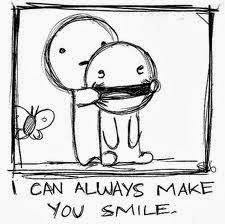

            Satisfaction serves progress just as sleep serves the brain’s ability to wash away toxins. Being in a constant state of movement associated with progress is akin to insomnia, the sleep disorder characterized by the inability to fall asleep or stay asleep as long as desired. Chronic insomnia can cause muscular fatigue, hallucinations, mental fatigue, and/or death, as seen in prion-based fatal familial insomnia.  


            If contentment is satisfaction’s primary task, it is an integral part of human progress that serves additional functions besides clearing out the negative effects of exhaustion associated with movement. Contentment, in this respect, is integral to well-being.


            Physical well-being must exist for progress to be sustained. Thus, the subjective interpretation of pleasurable experiences found in contentment must also exist for progress to be sustained.

            The argument for contentment as an integral aspect of progress can thus be presented as:

  • ·      For progress to exist, satisfaction must be present.
  • ·      Satisfaction is an integral aspect of progress.
  • ·      Therefore, progress cannot be sustained without satisfaction.


Monday, January 7, 2013

Send A Virtual Hug


♡  Lucky you! ♡  

You have just received a virtual hug! Feel free to share this with your friends who might appreciate receiving a little gift in their email box today. 

♡  Question ♡ 

Will sending virtual hugs to others make you (and them) feel happier? Can you send a virtual hug to yourself and actually smile and feel a bit warmer inside? (Try it!)  

Perhaps you would not hesitate to answer this question with a resounding, "Yes!," thinking of these cute little gif images above. 

How darling is the little girl who opens a box and gets the Giant Sparkly Star! And isn't the virtual hug adorable? Look - it's loading....ahhhh, how cute

"I had a pleasant time with my mind, for it was happy."
Louisa May Alcott, novelist
(◕。)


According to John Stuart Mill (1806-1873), happiness can be defined as the greatest degree of pleasure for the greatest number of people. Mill called this principle utilitarianism.

Happiness is a human quality to be realized, nurtured, and shared. While not all pleasures are identical in value, happiness seems to be the most desirable of them all. 

In exploration of what makes us and others happy, I am sending out a Virtual Hug to the World to see how many people it reaches, but more importantly, I am sending this out with the hope that the mere idea of a hug can bring a smile, a giggle, or simply a warm hearted feeling for any heart who needs it. 

My happiness as well as the happiness of others is of great interest to me. Thanks for visiting!  


Sunday, December 23, 2012

Formula for Simplifying Negativity Into Positivity

The general formula for simplifying negative energie is shown in the above image


When you have a positive outlook on life =  
If you encounter a negative moment = 

You can (consciously choose) to convert  
 into


By focusing on a positive thought 

whatever that thought may be


Both positive and negative energetic expressions exist in the world. What an individual experiences is directly related to how that individual internally processes energie.

Dividing negative or positive energie along its line of demarcation naturally neutralizes it. Neutral energie can be converted into either positive and negative energetic expressions depending on the dividing thought (be that positive or negative).

The formula for converting negative energie into positive energie can be expressed utilizing an infinite number of exponents or icons:


Mastery over converting negative expressions into positive ones involves:
  1. A continuous desire to live in a positive state.
  2. The natural ability to recognize negative energie.
  3. An evolved faculty to internally neutralize negativity back into positivity.


Sunday, December 9, 2012

I Believe in You


Think of the basic human right of believing in others as promised in the Declaration of Getting Along. In the realm of social unity, believing in others keeps with the ideals of enlightenment while simultaneously cultivating one's own character and sense of fairness. 

The Declaration of Getting Along

When in the course of human (or post-human) events it becomes necessary to dissolve the thoughts or actions that prohibit us from connecting with others on higher levels of understanding and reverence for existence, the expression "I believe in you" can be used to balance out any inequality in station in order to publicly acknowledge out of respect for oneself and others that the personal opinions we each independently hold are true until we personally and of our own accord discredit them as being such.

Believing in others is the doctrine whereby the mature, educated, and cultured individual chooses to believe in the success, good intentions, and/or the unique perspectives of others.  Believing in others frees us to expand our insights into new horizons whereby we learn rather than judge what we uncover about the world.


The reality of any situation remains that anyone can make a contradictory claim, anyone can disagree, anyone can make a claim of superiority in any subject matter over which they wish to claim dominion. 

But how few of us can truly claim to have dominion over any thought, even the ones that flow through our own minds? How many of us have gone down that negative highway of reality sputtering pollution that renders opaque and grimy any potential truth found along the way? 

By simply adhering to the age old adage: "If you don't have something nice to say, don't say anything at all," anyone can choose to suspend disbelief IN FAVOR OF BELIEF in ourselves and others. 

In the absence of the obsessive need for evidence, we can poise ourselves to uncover more than we ever thought possible. 


When we believe in others for the simple purpose of getting along, 
we always find something good. 


Believing in others helps us all rise to the occasion... 


Saturday, December 8, 2012

The Great Escape


A good synaptic retreat contributes to creativity or, rather, to the distinctive that results in creative thinking, but that's getting a bit technical, which always borders on non-sensical. 

The words "What If" always - and I mean, without fail - make me think and say "hmmmm". 

A small, barely audible force of breath incredulously makes its way out my nose as if hot on the trail of that truth fellow: that elusive, very slippery ambiguous little "tell it all" rascal that suggests he's got a box of insight intended just for me. 

My efforts unfold in my mind's prewritten script. For my role in this play, I am rewarded with this genuine, uniquely manufactured plastic trophy with the words: "Your Name Here" especially engraved just for me. The critics give me two thumbs up and my picture appears on the cover of Life Magazine with the caption: "Can't fool me." 


The thing about creative questioning and/or seriousness inquiries is that the evidence we uncover is 100% equivocal, even if its so-called "scientific". 

The words "What if" offer a magical kind of pleasurable escape from our initial interpretations, which define us. If we live in a place of fear, we constantly beg to have those interpretations changed. Fear-based interpretations cause us to protect ourselves BEFORE the flood of emotional turmoil (associated with events that came before this precise moment) has a chance to emotionally sweep us away again with that very real and imminently dangerous truth rapid that lurks just beyond the rock of our present vantage point. 

When people doubt information, like a news story they read on a Twitter feed or an excuse someone gives them for not calling, the words "What if" magically flood the mind with doubt in the Shadow Realm of "What If". 

When we ask "What If" from the Shadow Realm of our mind, our journey doesn't begin at Point Zero, it instead begins from an origin of pain, whereby it desperately seeks to reproduce itself by only acknowledging answers that fuel the doubts and fears.

This is the world where our only desire is to say: 
"Ha! I knew it. I was right all along!" 

 
Congratulations, here's another trophy.


Fear-based "What Ifs" are the ones that bring us down in a painfully creative crashing kind a way where we die a million deaths before the moment at hand has a chance to manifest. These are the thoughts that wound us before we die. These are the thoughts that wound us even if there's not a rapid in sight. 

They turn the joys experienced in hypothesizing, that naturally outward expanding phenomenon mirrored throughout the universe, and stomp all over it. 

But how do you know if you've hypothesized under the influence of a Shadow Realm "What If"? 


Good question (and another trophy for you). When the answers you get remain painful for days, months, or even years to come during normal consciousness, they're probably the shadowy ones that lurk behind the deep, dark allies of our brain's synaptic pathways. 

They turn a leisurely promenade through our mind's eye into a frightening, but secretly thrilling, race through all the intellectual errands we detest. Instead of walking into our mind's shop of Teddy Bears, where we normally imagine their soft fur, envision ourselves or someone else hugging them, and then walk out into the world and go buy or build one at Build A Bear in the mall...


We indulge instead in the Shadowy "What If" realm where cute little Giggles the Bear hideously metamorphoses into a scary Voo Doo Bear Doll aimed at getting revenge on Mrs. P for making us clean the chalkboard after school for the minor infraction of suggesting she was wrong about something and didn't know as much as she thought she knew because she came here to school with a bunch of kids everyday instead of going outside and checking on things for herself. 


Instead of assuming with the answers in place, we could use our magical "What If" words for good, turning this cleverly disguised inquiry into a healthy "What If" by asking Mrs. P to tell us more about her experiences. 

A SPECIAL THANKS going out to Mrs. P for waiting to point out until after class was dismissed (thereby protecting our dignity, even though we attacked Mrs. Ps) that we had accidentally allowed ourselves to indulge in destructive behavior, attacking without knowing or having the common sense to ask first. Irrespective of the validity of our inquiry, it came from the Shadow Realm of doubt, which is why we presented it in such an incredulous fashion whereby we didn't seek truth, we sought only to make our friends laugh and distract the teacher from realizing that we hadn't done our homework. This is not seeking, this is confirming a bias or supporting a prior agenda. 

(Disclaimer: Deconstructive rational thinking is a bit difficult for a kid, but it shouldn't be a problem for a healthy adult.) 


Of course, Mrs. P could have had a fight with her husband right before school, got irritated by our clever little inquiry, and justifiably (under the terms of social amnesia) lashed out at a poor, innocent little kid. Fortunately, she didn't. 

(Disclaimer 2: Mrs. P turned out to be pretty smart, which is a good trait in a teacher.)

Trophy for Mrs. P


The words "What If" offer us the greatest of escapes. They allow us to joke around and use our creative minds to hypothetically produce new, worthwhile ideas. Ideas that allow for more than one hero and more than one interpretation of truth. 

On the Sunny Side of "What If" tantalizing mysteries allow us to uncover the structures of reality we missed, the ones that offer new insights worth considering for longer periods of time (especially in normal consciousness); they offer relief from the illusory insights that haunt us; they even answer the question: "What if a Priest and a Rabbi walk into a bar?" 


Monday, November 19, 2012

Self-Dissection in 3 Easy Steps


If you're looking for the essence of your existence, why not try dissecting yourself?  Getting in touch with your inner self requires full existential involvement. Self-dissection can lead to happiness when you only allow yourself to focus on or think about those thoughts and actions that put into motion your deepest truths, needs, and desires.

Yet, self-dissection is a delicate undertaking. Expect too much too fast, and you'll risk the feeling that you're falling into a deep well or spinning out of control. 


STEP 1: PRIORITIZE

Make a list of your most important life goals, of the things (thoughts, experiences, feelings) that make you happy. If an action (thought, experience or feeling) doesn't make you happy and/or relate to those goals, reevaluate its presence by asking yourself if it should be there. If it does not belong, get rid of it. It's taking up valuable life real estate. 

STEP 2: SIMPLIFY

We live in an era of massive options - from what we want to do in life to where we want to live. With so many options, it's difficult to close the door on any possibility - just in case

Keeping too many windows of opportunity open drains our life house of valuable energie needed to sustain existing opportunities. This is one of the reasons people never seem to have time to do the things most dear to them. 

Just as you added life goals to your list, cross off the things you're doing that don't belong. However, leave them there. This way if they come up again, you can remind yourself that they don't fit and you'll know why. 

Being mindful of what works and what does not work helps us more easily align our lives in a way that feels harmonious because we're respecting our personhood.


STEP 3: ACT (Don't React)


Some people spend their lives reacting to people, places, and passing thoughts (fancies) instead of acting on behaviors that are in alignment with their life goals. These reactions are rarely harmonious; in fact, they can be downright destructive when we allow them to distract us from our life goals. 

You don't have to be a genius to manage runaway thoughts and emotions. Doing so will keep stress, worry, anxiety, and a whole host of unpleasant or otherwise unsatisfying experiences at bay. 

Keeping charts or lists of activities that are aligned with our goals is one of the many ways to keep our priorities in alignment. When we focus and act from these goals in mind, we don't have time to react over destructive thoughts or negative emotions. In this respect, lists can act as personal safety nets as well as life management tools. 

It's interesting, but it really is satisfying to cross off or otherwise chart our progress toward meeting goals (and milestones along the way). Just as when we were growing up and our moms and/or dads marked our growth on the door frame, we can mark our own growth or progress on charts we create for ourselves. 

This reinforcement activity helps keeps us focused. While some may claim not to need charts and lists, I personally find working with them easier than holding onto a bunch of stuff in my head. Holding too much in my head stresses me out and leaves me feeling physically drained, thinking that I have more on my plate than I actually do. When this happens, I tend to procrastinate. That is, until I go back to Step 1 and get my priorities straight again.

STEP 4: GO EASY ON YOURSELF (and others)

Holding yourself and others prisoner to guilt is a sucky way to spend eternity. Wherever or whenever eternity is, for me, it's happening right now. This is my eternity and I'm not going to waste it blaming myself or others for mistakes we'd all probably rather forget about and move on from. 

The point is to learn, to grow, and to have fun while doing it. Constantly reliving the past prevents us from living (as cliché as it sounds) in the present. 


When we can successfully manage even one of these steps we feel much happier about others, ourselves, and our place in the world. Our experience of living improves and consequently, so too do the quality of our lives. 


Friday, October 26, 2012

Mental Break


DIRECTIONS

Look at Animated Photo (Above)

Feel better?

YES or NO

If Yes, Congratulations! 
You know how to relax.

If No, Try again. 
You're obviously too stressed out.

HISTORY OF MENTAL BREAKS


Mental Break is the general term for a period of time in which your mind doesn't want to do anything but be entertained by mindless moving images. In politics, a mental break is initiated by a motion to "hide from the media" in order to "chill out" and "take the edge off."

Mental breaks were invented by our exhausted predecessors, who wanted nothing more than to forget about their hunting, gathering, and cave drawing duties in order to have some active physical playtime and time to grunt back and forth about the weather.


Wednesday, October 10, 2012

My Humor Bubble

My Humor Bubble

From the perspective of a playful mind, moments that would otherwise be perceived as interesting, puzzling, annoying, or frightening are actually funny. (McGhee, 1999). Some people are good at pointing out incongruities, absurdities, and ironies while people with a playful sense of humor notice silly, goofy, and the downright dorky. From inside a humor bubble, life, in general, takes on a rose-colored hue. 


Growing up with a vivid imagination, I often saw the world from the perspective of an alien landing on the planet, a spider making its way across the broad landscape that was my backyard, or from the sharp eagle-like eyes of a bird perched high above the house (on the roof, watching my family look for me). In school, I learned that life was far more serious than they would have otherwise had us imagine whilst finger painting in preschool and Kindergarten. 

No more would we sit out under the big Oak tree listening to tales of bunny rabbits and hippos walking tightropes. Nope! No more of that! Writing legibly and learning our multiplication tables, they explained, were "very important" if we wanted to grow up and have a nice life. Had I realized then that if I wanted a "nice" life all I had to do was tell myself it was a "nice" life every moment of the day, I might not have allowed myself to believe otherwise. 


Placing myself inside a self-imposed humor bubble, initially as a matter of principle, has resulted in my actually living in one. This is not to say that I didn't find many things in life humorous before, but to purposely adjust my attitude toward seeking these things out has shifted my perception on every level - theoretical, intellectual, emotional, metaphysical, and so forth. 


While a shift in attitude alone cannot change certain circumstances, it can adjust my reactions, which, with the advent of my humor bubble, can indeed alter the course of those circumstances. A playful attitude can help others see the humor in a situation, which collectively results in faster resolutions to perceived problems and challenges. It also helps me resolve my own internal conflicts easier and faster.


Living inside a humor bubble feels as though I've checked myself into an intervention program for the previously over-intellectual. This rational prison lacks the understanding that while something can be interesting and important, it can also, simultaneously, be hilarious and ridiculous. Somewhere between the two perspectives lies new understanding about the very nature of the concept itself (and ourselves). 


Good humor gives rise to a cheerful, amiable disposition. This intrapersonal (focus on self) relationship enhances interpersonal (directed toward others) relationships, encouraging more laughter, better moods, and easier communication. 

Rather than adopting a self-defeating serious attitude, a playful one allows us to engage in spontaneous witty banter to amuse ourselves and others.  It helps us put others at ease, while easing our own tension.  It even allows us to laugh at this ridiculous candle, thinking back to the days when our little brothers and their friends experimented in a similar fashion!