Thursday, January 24, 2013

Raising Funny Kids 17: Why Museums Don't Suck


My son, nephew, niece, and daughter,
Louvre, Paris, France (2012)


Some teenagers think that museums "suck," and, in part, they'd be right. Museums can suck when you don't have a storyteller guiding you through the magical land of cultural heritage to help bring a museum to life.

The walls that house the spoils of war and treasures of the world, when seen with an Alice In Wonderland-like perspective, can indeed feel a bit strange. 


Transplant an urban, American teenager from their natural habitat and drop them unprepared into the jungle of history, and it might look and feel a little like this: 


In Night At The Museum, Hollywood, on what I consider a rare occasion, actually imparted - in their classic, stylized way - a valuable idea, unleashing onto the general public knowledge early western scholars and church leaders fought so hard to keep hidden from the masses, namely: the idea that there's more knowledge out there than we realize. 


Everyone likes a good story and museums are filled with them. Still, like anything worth excelling at in life,  we can't just "show up" unannounced and passively expect the environment to edify and enlighten us; to tell us its deepest, darkest secrets without our first doing a little digging, decoding, and deciphering of our own. 

My Daughter, Puebla, Mexico (2011)

Just as an athlete makes sacrifices, getting up every morning at the crack of dawn to head out to practice when they could have easily stayed in bed for another hour or two...

...we have to go to great lengths to bring the museum to life. Like anything worth doing or learning, it is us who have to make the effort if we want to see results. We've got to hitch a ride on a jeep and explore the jungles of Mexico (or the outskirts of wherever we live) to appreciate the treasures that were found in the region, hauled across large distances without the means of modern transportation, finally finding their way into museums where they are now visible to the demanding public all over the world. 

Me 
Becan Mayan Ruins, Mexico (1994)


The next best thing to taking a voyage for ourselves is being swept away by someone's story about a grand journey they took. 

My daughter, son, and me
Puebla, Mexico (2011)


Museums hold the treasures ancient peoples either created or looted from all over the world: from Solomon's temple to the cave that hid the treasures of Ali Baba and the Forty Thieves, many of these objects are still finding their way out of obscurity, away from the hands of private collectors, and into the museum environment, the public custodians of humanity's history. 

If you are a book lover, a person with an affinity for the written word, you might consider a trip to Puebla, México, to Palafox's Library, the first public library established in the Americas (1646), as a trip worth making. Just like museums, libraries, national monuments, churches, cathedrals, abbeys, and ruin sites preserve something of importance.

We all, at some point in our life, question our origins and our future trajectory, we make sense of both uncertainties by connecting ourselves to what is certain, to the tangible aspects of reality, to our collective humanity. In the absence of a physical or existential servitude, we connect and serve one another. 

My daughter, Palafox Library,
Puebla, Mexico, 2011


In doing so, we uncover a world that unleashes our imaginations back to the sheer flamboyancy society previously lavished upon treasures of the mind, objects of worth, and those so-called creations someone labeled "treasures". 


The sensitive piety, the ostentatious monuments decorated by Michelangelo and Raphael, and the reverence that was displayed in the past were the reasons why these palaces, châteaus, and cathedrals were erected in the first place - to house the treasures and spoils of war for enjoyment and reflection. 

Museums continue to offer both of these qualities in abundance. A quiet place for contemplation as well as a meticulously perserved environment whereby treasures are safeguarded for the continued enjoyment of future generations. 

Once upon a society, all property - tangible and intellectual - had a deeper value because of the worth we ascribed to it, to its significance, to the progress it inspired, or to the reverence it revealed within us. 

Sold in 2004 at Southeby's auction for $104.1 million, 
Boy with a Pipe (The Young Apprentice)
Pablo Picasso, 1905.

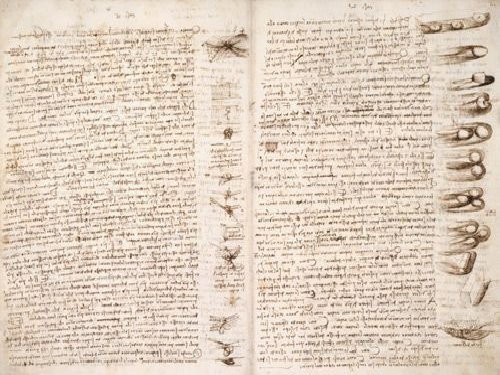
In 1994, Microsoft founder Bill Gates purchased Da Vinci's historic manuscript for $30,802,500. 

In 2007, Artemis and the Stag became the highest priced sculpture ever sold at auction when an anonymous buyer purchased the relic for $28.6 million. The sculpture is over 2,000 years old and hails back to the Roman empire. 

The Back Story: 

In the 1920's, a team of construction workers stumbled upon this sculpture while digging in Rome. I bet they wish they'd had been the ones to sell it at auction! You might enjoying knowing that the auction house thought the piece would only go for about $7 million. Boy were they wrong! 


It has been my experience that anyone who has experienced a degree of profundity in their lives, automatically embarks on a road of appreciating it - in its many forms - in others. 

Me
Kyoto, Japan (2007)


As we find this quality in ourselves, our exploration of the world takes us further. 

The works of art we have the privilege of viewing in museums inspires our minds beyond the mere spoils of war, beyond the wildly adventurous treasure hunts about which we love to read, they inspire our imagination in a way that yields to newer human creations. 

Jules Vernes Nautilus Inspired Metro Station
Paris, France


The love child of history and technology was science fiction. Jules Vernes' Nautilus (the impetus for writing we have George Sand to thank) was inspired out of Vernes' imagination - a combination of his appreciation for history combined with his love of futuristic technology (as seen in the gadgets he included in his tales; gadgets he saw at the various World Fairs he attended). 

Vernes didn't have the many adventures about which he wrote, but that didn't diminish the profound appreciation we had as a society for his writings ... for we, too, took those adventures with him. He took readers along on the rides of their lives, from the comfort of their own home. 

Seeing old things in new ways is at the heart of science fiction. For a generation captivated by the possibilities inherent in the technological advancements of our age, the museum is a rare gem, a cultural landfill offering a plethora of material from which to create humanity's next greatest science fiction story. Science fiction we love to turn into reality. 

In the days of Jules Verne, ordinary citizens understood more about the worth of an item, the craftsmanship that went behind the making of an object they held in their hands, and the difficulty one must undertake to come into possession of one of these items in the absence mass production. 

In response to the concept of 'museums sucking,' I'd have to say that, in all reality, it is mass produced items that 'suck' the life out of this generation's knowledge of the true craftsmanship that goes into making what we consider ordinary objects. A craftsmanship dying out faster than I can write this article. 

My son and daughter


On a side note, I have made a point to visit many of these 'last mastercraftsmen and women' of Europe, trade families who have survived generations and sometimes centuries of political unrest. Taking my children along for the visit, they often times leave with mixed emotions. Appreciation for the value of the work, the opportunity to learn more about our global history as it relates to culture, society, the arts and material progress, as well as the sobering recognition that they might never see it again. That few people will have the opportunity to traverse in their shoes and gain the personal appreciation they have for our past, for the collective history of humanity from whence even the most technologically driven among us derive. 

My son
Versailles (2012)


Perhaps it all comes down to a matter of taste. If you enjoy the plasticiness of pop culture, don't leave home, don't go to museums, just sit back and experience the world digitally - online. There will be less people for me to wait in line with in these locations if you do. 

However, if you, like me, enjoy a good story about a treasure hunt, intrigue or mystery; if you value the history of humanity, our collective history...

...then pay homage to your local museum by going for a visit. Not for the sole purpose of making fun of those who are there in search of their own adventures, but to explore - for yourself - the furthest regions of our world from the comfort of your own community. 


Hiking with the kids
Tepoztlán, México (2010)


Tuesday, January 22, 2013

Interferometry for Adventure Time Kids


Interferometry is what happens when two waves of energie interact. Take Finn (the Human) and Jake (the dog). They live in the post-apocalyptic Land of Ooo. Let's say they want to get out one day. They could joke around a bit, then when they're seriously ready to leave they could get a running head start and run until they ram into each other. 

The force they create could manifest a rainbow filled world of baby unicorns and singing mountains or a post-apocalyptic doom, the difference is largely based on the position from where they got their running start. 

If Finn and Jake were close together when they took off running, their collision might result in the rainbow of sensations one feels when in the presence of baby unicorns. 

If Finn and Jake were further apart when they took off running, then because of it, had to run for a long time to finally crash into each other, then, well, let's just say they'll need some brimstone to go along with that fire. 

So, there you have it kids. Interferometry in a nutshell. 


Monday, January 21, 2013

The CRAAP Test Worksheet

We are constantly surrounded by information, which means it's getting more and more difficult to know which sources we can trust. Being able to evaluate the credibility of any given piece of information requires sifting through a lot of CRAAP, thus when evaluating the credibility of a source of information, this handy CRAAP Test works like a charm (worksheet below).

TIPS for Using CRAAP


CURRENCY

Just as with your technological devices (make sure they're plugged in and charged), there is a basic order of operations with evaluating information. First thing's first, check the date. If it was published a couple of years ago, check online for updates or news related to that item. Search out the author and find out if they have published anything new on the subject. 

RELEVANCE

If you're relying on information to make an informed judgment either at work or in your personal life, it is imperative that you consider whether or not the information responds to your needs. If the information is simply superfluous, don't waste your valuable time. 

AUTHORITY

Certain images and wording can distort the representation of information. Do your research. In today's world, we're only a few creative clicks away from knowing what grades someone earned in University, what they ordered in the Cafeteria, and who their Facebook friends are... given the fly-by-night online universities trying to cash in on the "dropout epidemic," don't forget to check out whether or not a researcher's higher learning institution - where they received their degree in Underwater Basket Weaving - is accredited. 

ACCURACY

It is very easy to misrepresent information to support personal agendas (such as those associated with getting rich, quick). Don't just skim over references and the bibliography, make certain that the so-called sources are also credible ones. 

PURPOSE

Is the author trying to persuade you to purchase something, believe or behave in a certain way, or support a certain cause or organization... or was the information submitted to a university as a final thesis? If the author had something at stake (reputation, degree award, prize, educational advocacy, philanthropic reasons) there is a higher probability that the information represents the author's best understanding of a subject. 


(Click on form to enlarge) 


Humorous Halo of Significance


Humor allows us to experience familiar concepts as though for the first time, and occasionally, with a humorous halo of deeper significance. 

Seeing the world through a humorous lens seems to break down the oldness in favor of a newness that when explored opens our minds to the unexplored ways of thinking about old concepts, problems, and propositions. 

For a philosopher compulsively seeking distinctive philosophical insights for sheer entertainment, humor is like a drug that increases the brain's creativity - unleashing it upon spurious correlations and placebo-like effect thinking that predominates social interactions. 


The ideas we conjure whilst in a humorous mood come from the same mind, so it is as if the serious mind had previously denied these innovations admission to the privileged court of consciousness, until a joke or quip opens the way. 

"Oh! Oh! Oh!" Dyslexic Santa


While admittedly it is easy to get carried away with humor, projecting our imagination into many creative endeavors that we may never actually develop the talents to pursue, humor is still an invaluable ally in expanding and focusing whatever innate creativity a person naturally possesses. 


Humor allows us to mentally explore previously unsuspected dimensions of possible connections and associations. When you're in a humorous state, unexpected ways of understanding are presented to the imagination, and whatever their peculiar combinations suggest, we laugh, for it seems funny. 

As in my case, I explore humor specifically for the sake of experiencing the impression that the humorous state affords me, free from the limitations and inhibitions that constrain my ordinary creativity.

Humorous enchantments might give the comedian the appearance of existing in a straight-jacket: a crazy, zany, out of this world-type expression of self, but from within the (humorous) sensation it feels instead as if one has stripped the world of its straight-jacket, and is now enjoying seeing things distinctively, for how they might be, as well as funny, for how they actually are.

Whether they are or they are not, the mere idea titillates us in ways that affects how we process thought when not in a humorous state. 


The test of humor is not necessarily whether we create something brilliant as a direct result of humorous experimentation, but rather or not we allow it to exist as part of a background music, realizing that it might be helping us produce other work more creatively. 


Saturday, January 19, 2013

The Top 10 Mental Shortcuts


Most of us know more about the processor in our laptops and iPhones than we do about the core processor right inside our own minds. We employ relatively loose strategies to control problem solving, be that an educated guess, an intuitive argument, 'uncommon' common sense, or a rule of thumb method. 

Mental short cuts ease the cognitive load of making a decision. They speed up the process of finding a satisfactory solution to life's many challenging opportunities. Knowing which ones to use and when, can help us refine our decision making processes, while making better choices as a result. 

Recognizing how our minds process information can help us sort out anomalies while improving the efficacy of our thinking. Recognizing and actively testing out the short cuts we employ can minimize the unexamined long-term cognitive biases that hinder our ability to make significant progress in life. 

Top 10 Mental Shortcuts

  1. Anchoring - the tendency to rely too heavily, or 'anchor,' on a past experience or a single piece of information when making decisions. 
  2. Attentional bias - the tendency to pay attention to 'shiny' objects or emotionally dominant stimuli in one's own environment, causing us to neglect relevant data when making judgments or decisions. 
  3. Bandwagon - we've all heard of the bandwagon effect, the natural tendency to do (or believe) things because others have done (or believed) them. 
  4. Belief bias - when our evaluation of a situation is biased by a preconceived belief. 
  5. Denomination effect - the tendency to spend more money when it is denominated in small amounts (e.g. coins) rather than large amounts (e.g. bills). 
  6. Empathy gap - the tendency to underestimate the influence or strength of feelings, either in oneself or in others. 
  7. Frequency illusion - the illusion in which a word, name, or object that has recently come into one's attention suddenly appears "everywhere" with improbably frequency. 
  8. Neglect of probability - the tendency to completely disregard the probability of an outcome when making a decision under uncertainty. 
  9. Observer-expectancy effect - when a researcher expects a given result and therefore unconsciously manipulates an experiment or misinterprets data in order to find it. 
  10. Pessimism bias - the tendency for some people, especially those suffering from depression, to overestimate the likelihood of negative things happening to them. 


While there are hundreds of biases that either enhance or hinder our ability to make timely, rational decisions, these are 10 of the most common biases that result from our minds having taken a mental break or short cut when making decisions or judgments. 

In the future, we'll not just need our memories, we'll need to have a solid roadmap of how we process information to maintain our individuality. Copying those biases onto or into a new material will be a formidable task, but a necessary one if we wish to retain our unicity. 

As much as we are a culmination of our memories and life experiences, we are also a culmination of how we have learned how to process information and solve problems. Understanding how we make assumptions, discount facts, and/or produce decisions from motivations, wishful thinking, or cognitive assessments, helps us better appreciate who we are inside.   


Snowing in Paris


It's snowing in Paris! The romantic pink hue that we ascribe to Paris has been brushed by the color of angelic purity. Even the new curse words I've learned in French are coming out clean. 


The snow's ubiquitous influence is felt by everyone as they scurry from their apartments to the Boulangerie this morning. Swiping my hands along our snow-covered car, I delight in the stark difference between the snow's soft image and its icy distinction. 


There's an almost translucent, radiance outside that makes the streets of Paris seem as if they are glowing with white magic. Even little white lies are adorable in this kind of weather. 


Increasing awareness of, curiosity about, and imperative to go out and play in the snow has led to the 15 layers of clothing I'm wearing, just to go outside. 


Just kidding! These beauties would get ruined in the snow... 
In reality, I'm stuck wearing these boots:


With hand warmers stuffed into my gloves, and feet warmers tucked inside my boots, I'm ready to go out and uncover the invisibility of this white ubiquity. The snow provides an excellent provocation to go make tracks through theories of purity and goodness that defines the color white.  


Separating the lexicon of race from the color white allows us to formulate a sketch of what the concept "white" circumscribes. Reflected in its connotation are the concepts of stainless, spotless, unstained innocence. A pristinely clean, pure environment or concept. 


Eagerly, I prepare myself to go out and brave the snow-covered streets of Paris. With music from my iPod as an accompaniment, the warmth and aural dynamics from the bakeries beckon me inside. There's nothing like sitting in a café with a freshly baked, flaky croissant, a cup of coffee, and Le Monde to soothe the mind. 


While I sit here intellectualizing the deeper significance of a snow day in Paris... with my iPod, my new snow boots, MacBook Pro, and an all around aesthetic coolness, I find myself carried away by the beauty of it all. 

(Fia in her new snow outfit!) 


The Paris I've come to know and love has taken on a new meaning today. It's a soft, cool, nostalgic experience that most definitely deserves the 30 minutes I just spent writing this post... 


Tuesday, January 15, 2013

The Mimetic Art of Wile E. Coyote


There are many Greek stories recounting the mimetic theory of art. Perhaps the least known is that of Wile E. Coyote, Supergenius. 


Wile E. Coyote (also known as "The Coyote"), while know for his elaborate plans to pursue The Road Runner, much to our chagrin, has not yet been recognized for his contribution to mimetic art. 


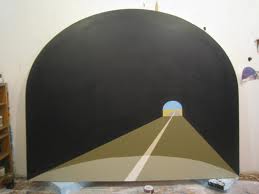
His ability to depict realistic tunnels on mountain sides went unnoticed until now. Wile E. Coyote painted tunnels that were so realistic that The Road Runner ran right through them. 


While the Roman writer Pliny the Elder (CE 23-79) gave an account of the Greek legend of the invention of drawing, in his Natural Histories, whereby... 

the Maid of Corinth's lover was departing to go and fight in a distant war, she noticed how his shadow had been cast by a candle on the wall of their room. She picked up a piece of charcoal and drew around the shadow, and created a perfect likeness or mimetic image... 

It was Wile E. Coyote who really brought home the question of what art does, and how it represents the world as we know it. 


The Coyote's tunnels are a faithful mimetic reminder of what it feels like when we get fooled or tricked into thinking something's real when it isn't.