Tuesday, January 3, 2012

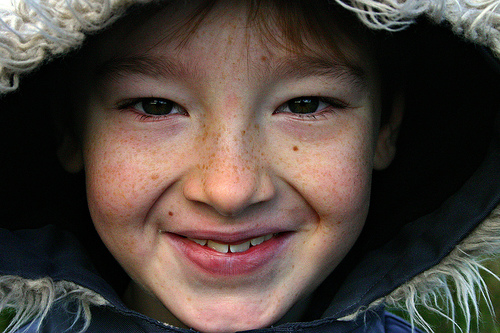
The Law of Smiling


In Milan, it is a legal requirement to smile at all times, except during funerals or hospital visits.


The 8th Boy Scout Law, which appeared in Scouting for Boys in 1908, states that: 

A SCOUT SMILES AND WHISTLES under all circumstances. When he gets an order he should obey it cheerily and readily, not in a slow, hang-dog sort of way. Scouts never grouse at hardships, nor whine at each other, nor swear when put out. When you just miss a train, or someone treads on your favorite corn - not that a scout ought to have such things as corns - or under any annoying circumstances, you should force yourself to smile at once, and then whistle a tune, and you will be all right. A scout goes about with a smile and whistling. It cheers him and cheers other people, especially in time of danger, for he keeps it up then all the same." 


"Service with a smile," has been the core of American business since the 1900s. Research continually proves that smiling really does increase attractiveness and likability between humans. People who smile produce what is called the effect, which correlates with greater trust, greater financial earnings, and increased interpersonal cooperation. 

A smile conveys respect, patience, empathy, hospitality and compassion. A smile also results in more "Good Samaritan" effects on others. 


People remember your name easier when you smile. In a study on smiling conducted by Takashi Tsukiura and Roberto Cabeza at the Center for Cognitive Neuroscience at Duke University, scientists discovered that smiling enhances our brains ability to remember names. The smiling facial expression activates the orbit frontal and hippocampal areas of the brain associated with name association. The brain also processes faster in the presence of a smile. The results demonstrate how rewarding a smiling face can be and how it enhances our relational memory ability. 


I Have a Humor Collection . . . T H I S . . . B I G !!!


The San Francisco Public Library, Special Collections Department, sent me two catalogs of the Schmulowitz Collection of Wit and Humor for Christmas! 


"More than any other time in history, this age of ours is fraught with tensions and threats of peril, but there is still one human characteristic that continues to stabilize our emotions and lessen our fears. That precious quality is our sense of humor..."  William R. Holman, City Librarian, Catalog Introduction (1962). 


Lin Yutang (1895 - 1976), Chinese writer and inventor, said about men and ideas that "only he who handles his ideas lightly is a master of his ideas, and only he who is master of ideas is not enslaved by them." 


The Schmulowitz Collection of Wit and Humor is housed in the Book Arts & Special Collections Center of the San Francisco Public Library. There you will encounter over 20,000  volumes and 160 periodical titles, in addition to rarities such as the Facetiae of Poggio, Joe Miller joke books, and my favorite, the works of Nasreddin Hoca. 


The Schmulowitz Collection houses a historical treasure trove of true human thinking. When people are joking, more truth in how they perceive the world comes out. While there have been a number of ill-bred jokesters throughout history, in this collection you'll encounter the sheer brilliance behind the greatest of all human inventions - our sense of humor. 


Here's what the experts had to say:


"A great book. But what do I know?" 
Socrates


"This book got me out of my cave." 
Plato


"An excellent book! Well, relatively." 
Albert Einstein


"It made me chuckle." 
Mona Lisa

Monday, January 2, 2012

Mommy Brain


I have a Mommy brain - energized and efficient, socially engaged and mentally alert. Years of nurturing, relentless acts of multitasking and emotional demands, combined with powerful hormonal stimulation and a flood of sensory experience has literally reshaped my brain, making it a much more complex organ. 

Motherhood provides the brain with some distinct metal advantages in perception, efficiency, resilience, motivation, and emotional intelligence. Epiphanies manifest at lightening speed when you're actively shaping the mental, emotional, and physical life of another human being while simultaneously evaluating your own. 


With that being said, I just love these pictures! 


Raising Funny Kids 5

REWARD vs. PUNISHMENT

Disciplining children has long been associated with a set of rules, rewards and punishments administered to teach self-control, increase desirable behaviors and decrease undesirable ones. 


I have long since advocated for the exclusion of the "reward vs. punishment" methodology in raising my own kids, considering it conspicuously old-fashioned, notably anachronistic. Yet, this theory is continually put to the test by... life. LOL


For example, my son and I have had a number of discussions about his leaving the television set on at night. We have discussed the matter with respect to the fact that many electronic devices, television sets and computer screens with cathode ray tubes (CRT), can potentially create low-level x-rays that are not good for the body. Understandably, most of our discussions have been focused on health and well being. 


We've also discussed my disconnecting the television at night until he is capable of doing so himself, explaining that my interest is not in punishing him but rather in protecting his health. Then, each morning I enter his room, I am greeted by soft silent glow of Sponge Bob or Phineas and Ferb on a television set that stayed on all night. 


Staying true to my philosophy while ensuring his health has been a challenge in the back of my mind as to how to solve it. Then, last night, the lightbulb went on - a timer. 


When I asked my son what he thought of the idea, he said, "Wow! That's a great idea Mom. Now I can relax and not worry about it." You should have seen the look on his face. It was priceless. It was like together we had beat the "reward vs. punishment" theory with a $20 power strip timer. I could literally see the wheels turning in his mind, has he wondered in which other areas of his life he could apply this new concept. 


Each day, I ask my kids to tell me a joke. At first, they're annoyed with the task. Then, once they choose a joke from our collection of joke books, they end up reading off another 10 or so just for the fun of it. Immediately, they're making up their own. My son rattles off a series of zany Knock, Knock jokes while my daughter's more subtle, sophisticated wordplay comes out during discussions when she inserts a clever pun. She's been delighted by a recent descriptor added to her personal identity - Punster. 


At 16 years old, she said, "I didn't know I could be funny," with a pleased twinkle in her eye denoting that she thoroughly enjoyed the idea. 


If we're lucky, parenthood can bring out the best in us. Being a hero in the eyes of our children is an experience so profound that it is dwarfed by human language. 


Take a moment to truly evaluate what you child's day-to-day experiences in life might "feel" like. That's usually the best place to start when you run into a snag or find yourself wondering what to do to solve a problem or improve a general situation. Their gleaming smiles will tell you when you've inspired them to apply those ideas elsewhere. 


Lao Tzu (6th century) said, "Because of deep love, one is courageous."  

Sunday, January 1, 2012

Kerschnickered


Have a few "too many" last night? No worries. Does the word "pickled" mean anything to you? It's more than just a descriptor for preserving food in vinegar or brine, and it isn't just slang for losing one's faculties after having ingested large quantities of alcohol (i.e., intoxicated, inebriated, sloshed, smashed, *faced, toasted, blitzed, kerschnickered). 


According to study published in Medscape Today on "boozing it up" by Siegfried Weyerer, PhD, from the Central Institute of Mental Health in Mannheim, Germany, "There is strong evidence from previous longitudinal studies that [drinking] a small amount of alcohol is associated with lower incidence of overall dementia in Alzheimer dementia." Compared with teetotalers, subjects consuming alcohol were 29% less likely to develop dementia and were 42% less likely to develop Alzheimer disease. 


Alcohol isn't the only agent working for us against Alzheimer disease - drugs work, too!  A study published in the Journal of Biological Chemistry confirmed that mice with Alzheimer disease showed marked improvement in memory and cognition after being fed a rapamycin-enhanced diet. Rapamycin is a bacterial byproduct discovered in the soil of Easter Island. 

Whether it's alcohol's anti-inflammatory properties or drugs and alcohol that are the best choices against dementia, one thing is for certain, social drinkers are social. 


What's really happening?  Perhaps the cure for many diseases is much more simple than any study can tell us in data, statistics and charts. Being social feels good. Having friends, sharing life stories, joking, laughing and loving others is what should be studied. One of the many things that unites all species is that we are social, we look to see who's driving the car next to us at the stop light, puppies will cuddle with kittens when allowed to do so, and we visit our friend's Facebook walls for a reason - it feels good.