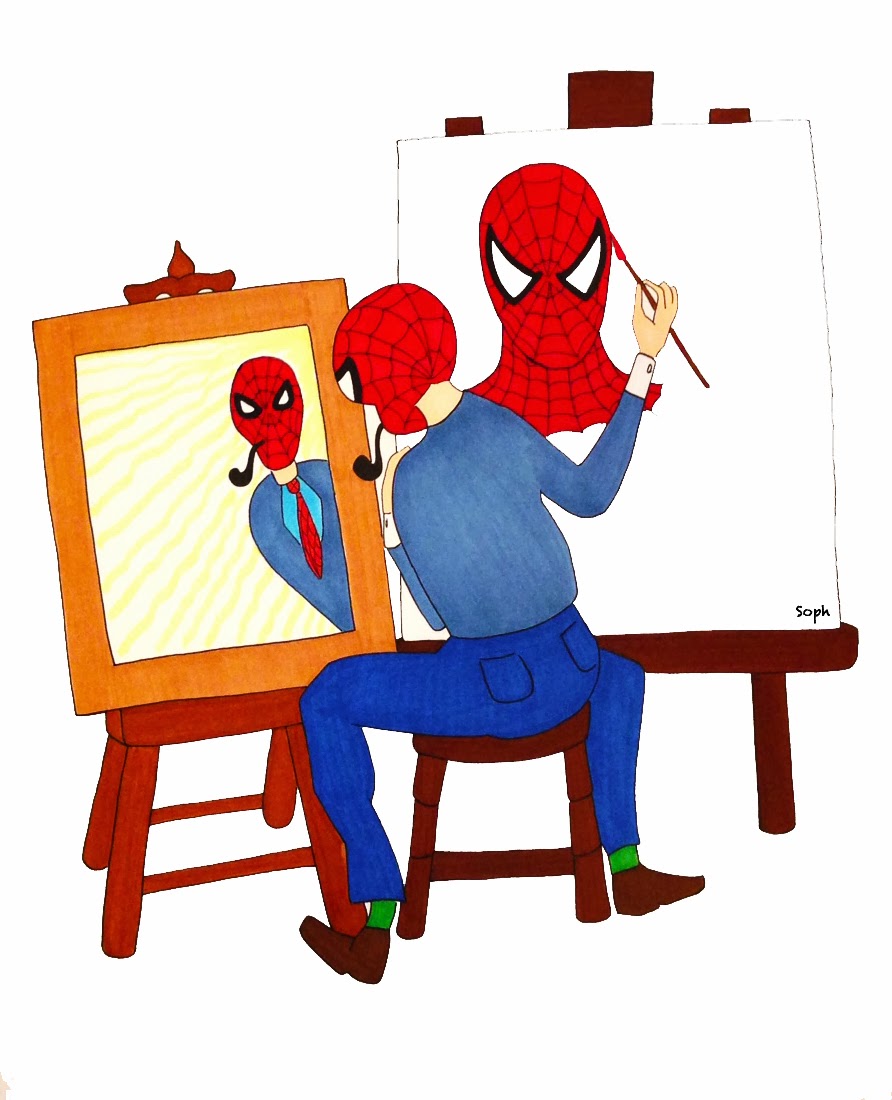
Wednesday, March 12, 2014

The Case against Enlightenment


A different and potentially more serious problem with the World's goal of mastery over itself is our success in doing so. What happens when ordinary citizens and individuals join forces with the aim of perfection as its pursuit? The desire to control ourselves reveals a dangerous kind of arrogance that could lead to various unpleasant consequences. These include:

  • an increase in our moral burdens to do an inflation of our moral responsibility,
  • a decrease in our ability to promote a sense of community and togetherness,
  • and the emergence of a society unable to adjust to the unexpected or disagreeable elements it might face.
The more the World tries to achieve its goal of self-mastery by deciding exactly what the next generation of enlightened beings will be (the more it involves itself in determining which super-foods folks should eat, which educational reforms lead to enlightened thinking, which exercises promote physical, emotional, and spiritual evolution, and so forth), the more it burdens itself with a significant degree of moral responsibility over what constitutes evolvement for all of the World's citizens. The more the World does this, the more the World removes the ability of such persons to form their own judgments on enlightenment. The more the World does this, the more inflexible the World makes itself in dealing with the anomalies that will inevitably arise. And given what history has shown us, it seems quite reasonable that such things are happening and will continue to happen, regardless of whether they are brought about by the 'Gluten-free, yoga practicing, Vegan World' or not. 


So, should we conclude that the World's goal of mastery is morally wrong? As it stands, no. Let's focus for a moment on a particular argumentative strategy. Our objective is the moral evaluation of a particular goal. And our tactic in determining what distinguishes good goals from bad ones is to consider the likely consequences that would ensue if that goal were adopted. This is a fine approach as far as it goes, but it opens itself up to the counterargument that the good things likely to result from pursuing the goal have been ignored or at least downplayed. If, instead, they're given their proper due, so the counterargument goes, it'll be seen that they outweigh the bad things that are likely to happen. 


When it comes to the World, this response amounts first to acknowledging the bad things that are likely to result from the World's efforts to control the emergence of enlightenment. But then goes on to emphasize the good things that will also likely ensue, suggesting that they outweigh the bad. These good things will no doubt include saving or prolonging the lives of millions of people who still eat fast food, processed food, and who drink water from plastic bottles, which contaminate the entire planet. When the good of these saved lives is weighted against the bad of the World's increased moral responsibility and inflexibility, and even its interference with intrinsically valuable personal growth processes, it clearly seems that the former trumps the latter. 


Now should we conclude that the World's goal of mastering enlightenment principles isn't morally wrong? That, in fact, it might even be morally right? Believe it or not, the answer again is no. This is because of the inherent limitations on any speculation about the consequences of pursuing a specific goal. The problem is that the speculation is, well, speculative. What does this line of thinking amount to? The moral status of some goals is determined by the actual (versus the likely) consequences of following the goal. That's all well and good, of course, but it makes evaluating goals prior to their adoption difficult and speculative, at best. 


Where does this leave us? While some goals might be inherently bad, that is, bad regardless of a consideration of further factors, the goal of mastering ourselves is not like this. A consideration of the further relevant factors that would help us determine its moral status, however, has proved inconclusive (mostly because I don't feel like expounding on them this morning). So on this count, at least, the World has a get-out-of-enlightenment-free card. 


Proudly brought to you by


& 

"Praying for the world so you don't have to.."

Tuesday, March 11, 2014

What Would Society Really Do With Superheroes?


As a lifelong science fiction fan, I often times soar along that thread of imaginary reason cajoling my rational mind toward the outer limits of reality where new scenarios await my fanciful concoctions. After yesterday's post on The Imaginary Contract, I got to thinking about social contract theorists like Hobbes and Locke, who wished to create a society of equals. In a discussion with a blog reader, the notion of Superheroes not participating in the social or imaginary contract by nature of their Superheroness got me reeling:

To end these topics on a positive note ... I'm wondering about Super Heroes in that they have powers beyond the ordinary ... by what laws are they bound? Perhaps not by their superheroness but by their normality in the sense that they love others and enter into relationships with others ... hence even Superheroes participate in the social contract, or in the imaginary contract, in this case. From their actions, they not only participate, they honor it ... and that's what being a Superhero is all about. :D Yay!

While my assessment was quick, my mind was quicker to jump on that thread of imaginary reason and think about how society might react to real Superheroes. If science fiction books, movies, and television shows are any indication, Superheroes might as well take flight before they find themselves sequestered into tiny cells or camps living out the remainder of their days being poked and prodded by curious scientists reporting to power obsessed government officials.

When you relate Superheroes to individuals with extraordinary talent or mental abilities, it is not entirely fanciful thinking any longer that allows one to imagine what a government might think or do with an individual who, for example, could fly or read minds or who doesn't participate in the blanket of amnesia that covers the world, hence an individual who 'remembers' existence in other states or forms of matter. We can imagine the government bringing them in as children, presuming teachers recognized something "different" about them. We can imagine their being given a series of seemingly endless tests where the sheer monotony of puzzle solving, for example, might lead one of these children to psychologically reject puzzles for the rest of their days. That's a great way to eradicate high functioning thinking. Of course, there's the other option, a government could take one of these children and put them through rigorous training with the aide of a well-meaning and benevolent psychologist who ensures that some of the child's emotional needs are being met so that they might participate and hence grow up into an adult that exhibits extraordinary abilities, which of course would be harnessed according to the needs of the funding authorities.

As the world advances in technological prowess, many of these Superheroish abilities will become common place. But with evolution as our witness, even if comes the day when everyone on the planet is endowed with access to massive amounts of knowledge, invariably a select few will naturally and intrinsically harness that information toward heights never before conceived by the whole of humanity. And if the government reads our emails and texts now, pretty soon, they'll be pilfering through our thoughts. The moment an individual's thoughts exceed ordinary parameters as set forth by future social contract theorists, those Superhero-like individuals might find authorities breaking down their doors in the middle of the night hauling them off to some laboratory for future testing.

The more we advance, the more Superhero-like individuals that arise along the way, the more endangered they might become. We do not have to travel to an alternate future timeline to imagine these scenarios. That's when science fiction changes genres. In the meantime people learn how to control the weather, turn lights on and off with their minds, sense with remarkable accuracy the thoughts and sentiments of others, mentally transcend the limits of bound material configuration, and fly ... we might need a new world order, a modern day Revolution of sorts, that puts forth policies rather than relying on people, to safeguard us against big brothers everywhere.

The tide is changing. 
The future of Superheroes depends on us! 


Monday, March 10, 2014

The Imaginary Contract

Still Life Writing Table
William Michael Harnett
Private Collection


Writing offers us a powerful way of expressing ourselves and of answering our many questions about life and living. A beautifully impersonal penning inspires and fuels our minds with edenic images of time in suspension for our examination and rumination through the fields of flowers, but a narrative is often what people prefer to read. From the fables of Aesop to the stories of the Bible or Qu'ran, the narrative form provides a powerful way of learning and remembering moral lessons.

Still Life, Pipe and Mug
William Michael Harnett
Private Collection


Our world is rich with weird situations. Filled with intriguing characters whom we know and love, or imagine and despise. We use their lives to ask and answer our own questions about life. It is as if we have an "imaginary contract" with others. A binding but unwritten agreement between ourselves and others to write our own narrative, to compare our lives, our morals, and our beliefs against the actions of another. How are we alike? How are we different? Would we be the same or different if we had their lives?

Candaules, King of Lydia, Shews his Wife to Gyges (1820)
William Etty (1787-1849)


The 'Imaginary Contract' arises from the realization that we are separate and that it's in our best interest to understand exactly how and why. We slip on the Ring of Gyges when we enter our imagination and walk through the life of another. We can use the ring to imagine how to help another or how to get from them what we need for our own lives. We use the imaginary ring for good or evil, depending on our circumstances in life, our morals, values, and mindset. In a sense we disregard the social contract we have with others to do no harm, and have others, in turn, treat us the same. While the act of imagining another person's life and actions may do no harm in the traditional sense, what we do afterwards is a direct reflection of what we previously imagined, turning the act of imagining into a preconception.

The Eye of Sauron


This act of imagining is related to the principle of 'natural justice,' which is an aspect of human ethics. Certain actions are embedded in our conscience. Justice is primarily based on natural ideas and values which are universal in nature. In this respect, imagining the lives and motivations of others and placing ourselves into those scenarios is all about fairness, reasonableness, equity and equality.


Imagine a time in the near future when we will be able to 'sense' another imagining us or hacking into our lives via their imaginary cortex. Will we deem this permissible, or will each thought become an aspect of our lives admissible in a court of law? Will we someday determine the circumstances by which we might think of another? Will we be allowed to think ill thoughts or will thinking ill thoughts count against us? Will psychologists be able to assist us in correcting our thoughts about others, while mentors aide us in thinking more positively until we can actively imagine them in positive situations. Could the simple act of imagining every human as a good agent capable of achieving their goals while simultaneously assisting us to achieve our own aide in their (and our) ability to do so by nature of our buying into that heightened reality? Only time will answer these questions ... 


MORAL: 

Mind what you imagine
it matters. 
இڿڰۣ 


Sunday, March 9, 2014

A Dream of Genius

A Dream of Genius (2014)
Soph Laugh


                        Be not afeared: the isle is full of noises,
                        Sounds and sweet airs that give delight and hurt not.
                        Sometimes a thousand twangling instruments
                        Will hum about mine ears; and sometime voices
                        That, if I then had waked after long sleep,
                        Will make me sleep again; and then, in dreaming,
                        The clouds methought would open and show riches
                        Ready to drop upon me, that, when I waked,
                        I cried to dream again.
                                                                       
                                                  (William Shakespeare, The Tempest 3.2.132-40)

Winged Horses (2014)
Soph Laugh


The Platonic dream of ascent toward the Heavens elicits a demurral in the modern spirit. We “recognize” but do not necessarily “participate” in the figurative ascent on noble, winged horses of the gods; soaring upward until we become the rulers of the universe. In this case, our forbearance works like the light of the sun on Icarus’s wings, bringing us back down to earth, where we settle on solid ground.

            The intellectual leap one must make in order to imagine a Platonian ascent into that non-material abstract form, known to us through sensation, requires our evocation of an imaginative eidos. In the Husserlian sense of “essence,” the idealization of forms, the pastoral retreat, the ideal Republic, the Golden Age that sparks genius, we must depart from solid ground, relying only upon our senses to guide us upward where we might formulate a possible solution to the problem of universals.

            In metaphysics, the problem of universals refers to the question of whether properties exist, and if so, what they are. Properties are qualities or relations that two or more entities have in common. The various kinds of properties, such as qualities and relations are referred to as universals. For instance, one can imagine creating a musical composition that has in common the quality of being inspired or exemplifying genius, or one can refer to complex thoughts that have in common being the essence of that force which animates one toward the creative expression deemed 'genius'.

            The “descent” toward earth highlights what is cast in shadow by the major conflicts of mind, which reluctantly affirm and pay tribute to restraint and stoicism; the belief that virtue, the highest good, is based on knowledge. Given that we cannot claim authority over knowledge, we must bow in reverence to that very essence or quality which gives rise to it. Consequently, our “ascent” toward knowledge is perceived as a false conquest, a dream-like encounter with that which can only be reached by virtue of our imagination. 

Liberating Imagination (2014)
Soph Laugh


            The possibility of transcending this dream-like ascent into the very essence of existence to the point where human understanding is illuminated is hotly debated, but that does not prohibit one from attempting to understand why the sun rises, why we exist, or from whence arise the forces that animate the material universe.

            Separating genius from the individual is akin to the noble escape from the environs of earth toward the musical spheres of the heavens. Hearing even a faint mellifluous sound echoed in our minds gives us hope that transcends our arrogance, our self-aggrandizement, our self assurance and certainty of things. The timbrel’s thunder quiets Calibran into servitude, the sound of the drums sweet and high exalt the architecture of our minds, and the protective and benevolent design that is mimetic of cosmic logos becomes accessible in the duplication of its reality implicit in the physical state.

                        I prithee, let me bring thee where crabs grow;
                        And I with my long nails will dig thee pig-nuts,
                        Show thee a jay’s nest, and instruct thee how
                        To snare the nimble marmoset (The Tempest, 2.2.157-60)

Conjuring Bunnies (2014)
Soph Laugh


            As Caliban conjures the creatures of the island and echoes them, so too do we conjure genius and echo it in our thoughts and productions. The explorers of genius contort themselves in straining to see beyond natural presence. One is rewarded for this transcendent impulse by seeing only his own image on the surface of it. This accomplishment climaxes when he mirrors or mocks the image he thinks he sees. The ineluctable fact of uncertainty tests his exalted aspirations and reminds him of the comic aspect of belief, claims, and knowledge. For both explorer and the essence being explored, the aim is art, or song, and the resultant creation or note becomes the echoing sound of hope, whistling in one’s ears.

                        Blest pair of Sirens, pledges of Heav’ns joy,
                        Sphear-born harmonious Sisters, Voice, and Vers,
                        Wed your divine sounds, and mixt power employ
                        Dead things with inbreath’d sense able to pierce,
                        And to our high-rais’d phantasie present,
                        That undisturbed Song of pure concent,
                        Ay sung before the sapphire-colour’d throne
                        To him that sits theron
                        With Saintly shout, and solemn Jubily,
                        Where the bright Seraphim in burning row
                        Their loud up-lifed Angel trumpets blow,
                        And the Cherubick host in thousand quires
                        Touch their immortal Harps of golden wires,
                        With those just Spirits that wear victorious Palms,
                        Hymns devout and holy Psalms
                        Singling everlastingly;
                        That we on Earth with undiscording voice
                        May rightly answer that melodious noise;
                        As once we did, till disproportion’d sin
                        Jarr’d against natures chime, and with harsh din
                        Broke the fair musick that all creatures made
                        To their great Lord, whose love their motion sway’d
                        In perfect Diapason, whilst they stood
                        In first obedience, and their state of good.
                        O may we soon again renew that Song,
                        And keep in tune with Heav’n, till God ere long
                        To his celestial consort us unite,
                        To live with him, and sing in endless morn of light.
                                                                       

                                                                       (At a Solemn Music, Milton)


Saturday, March 8, 2014

How Philosophers Think


Where does it come from, this quest? This need to solve live's mysteries, when the simplest of questions can never be answered. Why are we here? What is the soul? Why do we dream? Perhaps we'd be better off not looking at all. Not delving, not yearning. But that's not human nature, not the human heart. That is not why we are here. 
-Mohinder Suresh, "Genesis" 

The Philosophical Quest

Like many who came before me, I began my philosophical quest early in life. Full of questions and eager for answers, I began asking questions as a child. When the answers did not satisfy, I turned to philosophical works. Finally, after changing majors, I switched to philosophy and after the first day of my Introduction to Philosophy class knew I was in the "right" place. 

The "right" place is an interesting notion. Is this blog the right place for my writing? Is the Earth the right place for me? Is being human right for any of us? What is human? Just a made up word. Can life have any meaning if all our words are simply a growing compendium of made up words? We speak about science and technology in the most serious of tones, and yet the words we speak are also made up. The concepts to which we so dearly clasp are built up on a foundation of made up words. How do we escape? Is there anyplace to which we can escape? If so, what would we do there? Is life an endless stream of made up experiences merely because we have the material with which to make them up? Does it matter? 

No wonder a large percentage of my classmates changed majors. Not from something else to philosophy, but from philosophy to anything else. Philosophy can drive you to the brink of non-existence where you feel as if there is no purpose to life because we cannot find the answers to the simplest questions we ask ourselves in life. It can also deliver you from the Gates of Belief where you allow yourself to believe that you have the answers. If you cross that gate, you're in dangerous territory. I would rather spend an eternity not knowing rather than believing I know something that is unknowable. Of course, if there were an exit code, a being to answer all our questions, a magic portal through which we could travel to a place where all our questions could be answered, how long would it be before we started our questioning anew? 

The Questions We Ask

It is human nature to question, which makes us all philosophers. How we go about questioning, the methods we use, the labels we ascribe determine what we call ourselves. The psychologist studies how people think and the causes of people's beliefs, whether their thinking is rational or irrational. But the philosopher studies how we ought to think IF we are to be rational and seeks to clarify whether our reasons for holding a belief are good or not. 

The historian seeks to increase our knowledge of past battles by gathering facts and determining which accounts of the events are the most accurate or true. The philosopher asks, What is knowledge? What is a fact? What is truth? Which method do we use to determine whether something is true or not? Is there an objective truth, or are all of our opinions relative? 

The physicist studies the ultimate constituents of physical reality such as quarks and neutrinos, black holes and black matter. The philosopher asks, Is physical reality all that there is? The neurobiologist studies the activity of the brain, but the philosopher asks, Are all mental events emanating from the brain, or is the mind something separate from the brain? The psychologist attempts to find causal correlations between criminal behavior and the individual's genetic inheritance. The philosopher asks, Is all behavior (good and bad) causally determined, or do we have some degree of free-will that cannot be scientifically explained? 


INTERMISSION: 
A PHILOSOPHICAL JOKE

A man, accused of committing a crime, walks into a courtroom. The judge asks him to place his hand upon the Bible and swear: "I swear to tell the truth, the whole truth, so help me God." 

The man takes his seat and listens attentively as the evidence against him is presented. After each witness testifies and the juror hears their testimonies, the man is finally brought to the stand. His defense attorney asks him a number of questions and finally asks him whether or not he committed the crime. 

The man responds, "When I came into the courtroom you asked me to place my hand on the Bible and swear to God that I would tell the truth. Presumably the court and hence the State believes that God exists. If God exists, then he created us all. If God created us all, then, really, it is God who is on trial, not me. If the court believes that God created us all, but his creations have free will, then this becomes a philosophical discussion not a legal proceeding. Let us first begin by examining the notion of free will, then we can examine whether or not I committed any crime." 

A murmur is hear throughout the courtroom. The judge bangs his gavel on the wooden block on his desk. "Order! Order, in the court!" he shouts. 

The courtroom grows silent. After a few moments, the judge decides to speak: "Mahatma Gandi, a great philosopher and leader, once said, 'Truth never damages the cause that is just.' Let us proceed with your case and examine the notion of free will afterwards. 

The Questions We Ask, cont.

The astronomer studies the laws that govern the heavenly bodies such as stars and galaxies. The philosopher asks, Is the existence and nature of the universe self-explanatory, or does it need an explanation or a divine creator that exists outside it? How do we account for patterns or order in the world? Is evidence of design sufficient to prove a designer? The meteorologist studies the causes of hurricanes. The medical researcher studies the causes of illness. The philosopher asks, Is there any rational way to believe in a good, all-powerful God who permits the undeserved destruction by hurricanes or the suffering of innocent people? Is the evidence of undeserved suffering an argument against the existence of a God? The sociologist studies the religious beliefs of various groups and the social needs these beliefs fulfill without making any judgments about the truth or rationality of these beliefs. The philosopher asks, Is faith opposed to reason? 

The anthropologist studies the moral codes of various societies and describes their similarities and differences, but does not decide which ones are best. The philosopher asks, Are there any objectively correct ethical values, or are they all relative? Which ethical principles (if any) are the correct ones? How do we decide what is right or wrong? 

The political scientist studies various forms of government. The philosopher asks, What is justice? What makes a government legitimate? What is the proper extent of personal freedom? What are the limits of governmental authority? Are there instances when disobeying the law is ever justified? 

The Wonder of Philosophers


In a way, the questions we ask are the answers we seek. The way in which we ask them define in made up words how we look at ourselves, each other, and the world. The fact that we ask them, as Mohinder Suresh says in the opening pilot episode as well as in the first season finale of the television show Heroes, is what makes us human. Of course, ask a philosopher, and the philosopher will in turn ask, What is a fact? By what criteria can we know a fact? What does it mean to be human? By what criteria do we define our humanity. And .... 


Friday, March 7, 2014

The Odyssey of Genius

Jupiter, Mercury and the Virtue (1515-18)
Dosso Dossi (1490-1542)
Wawel Royal Castle, Poland
 இڿڰۣ 


Genius, Virtue, and Reputation, three great friends, agreed to travel over the island of Great Britain, to see whatever might be worthy of observation. But as some misfortune, said they, may happen to separate us, let us consider, before we set out, by what means we may find each other again. “Should it be my ill fate,” said Genius, “to be severed from my friends – heaven forbid! – you may find me kneeling in devotion before the tomb of Shakespeare; or rapt in some grove where Milton talked with angels; or musing in the grotto where Pope caught inspiration.”

            Virtue, with a sigh, acknowledged, that her friends were not very numerous; “but were I to lose you,” she cried, “with whom I am at present so happily united, I should choose to take sanctuary in the temples of religion, in the palaces of royalty, or in the stately domes of ministers of state; but as it may be my ill fortune to be there denied admittance, inquire for some cottage where contentment has a bower, and there you will certainly find me.”

            “Ah, my dear friends,” said Reputation very earnestly, “you, I perceive when missing, may possibly be recovered; but take care, I entreat you, always to keep sight of me, for if I am once lost, I am never to be retrieved.”

Genius, Virtue and Reputation, Aesop’s Fables


Penelope Weeping over the Bow of Ulysses, (c. 1779)
Angelica Kauffmann (1741-1807)
Wolverhampton Art Gallery
இڿڰۣ


Genius expresses her devotion to productions of herself, and unlike Penelope in her letter to Ulysses –

            Your Penelope sends you this, slow Ulysses (Heroides 1.1)

- maintains that devotion by kneeling before genius, by allowing herself to be enraptured in the grove where Milton communed with angels, and in her musings in the grotto where the Pope found himself in accordance with inspiration.

            In Penelope’s epistle to the absent Ulysses, the reader ‘knows’ from Homer, Penelope’s anxiety in Ulysses’ ‘delay’ in returning home may have erotic causes, that behind the mora may lie amor (74-6), is not as foolish as she proclaims. This gap in ‘knowledge’ between the Ovidian reader and the fictive writer makes irony the dominant mode of Heroides I and is central to the ironic relationship humans have with knowledge and the source or essence from which it derives.

The Cyclops Polyphemus
Annibale Carracci (1560-1609)
இڿڰۣ


            The other heroines of Aesop’s Fables play similar roles in illuminating our understanding. Virtue, sighs in acquiescence and resigns herself to taking sanctuary in the temples of religion, in the palaces of royalty, or in the stately domes of ministers of state, much like how Odysseus, after his encounter with the Cyclops, must achieve a new epic identity, an epic about his homecoming, about his own nostos  'return', but, for the moment, his confidence in his power to bring about this nostos is reduced to nothing. He has lost his confidence in the power of his own mētis 'craft' to devise a stratagem for achieving a nostos. When he reaches the island of Circe and learns that this place, though it first seems familiar and reminiscent of his own island, is in fact strange and alien and antithetical to home, he despairs (10.190-202). The wording that expresses his desperation connects the hero’s metis with his nostos:

              My friends, I am speaking this way because I do not know
              which place is west and which place is east
              -which is the place where the sun, brining light for mortals,
              goes underneath the earth
              and which is the place where it rises. Still, let us start thinking it
              through, as quickly as we can,
              whether there is still any craft left. I must tell you, though,
              I think there is none.

                                                                               Odyssey 10.190-93

Odysseus and Penelope (1802)
Johann Heinrich Wilhelm Tischbein (1751-1829)
Private Collection
இڿڰۣ


            The hero feels he has no craft left in him to devise a stratagem for a successful homecoming, and like Reputation, expresses his despair and feeling of disorientation. Unlike Genius and Virtue, Reputation, like the epic hero Odysseus, must live out the master of her own heroic life, and like Odysseus must have a nostos or ‘homecoming’. For Odysseus to succeed in coming home to Ithaca, however, his nostos must be more than simply a ‘homecoming’: it must also be a ‘song about a homecoming’. The kleos or 'epic glory' of Odysseus depends on his nostos, that is, on the song about his homecoming, which is the Odyssey. By contrast, the kleos of Reputation depends not on Reputation’s nostos but on Reputation staying home.

            For Odysseus to get over the Iliad, he must sail past it. For Reputation to stay in tact, she must remain home and not venture forth into the ironic and disoriented domains of Genius and Virtue. But staying home is a false Iliad, which is why, like Odysseus, Reputation must sail past the Island of the Sirens. The Sirens, as false Muses, tempt the hero by offering to sing for him an endless variety of songs about Troy (Odyssey 12.184-91). The sheer pleasure of listening to the songs of the Sirens threatens not only the homecoming of Odysseus, but the self-knowledge that may be gained by Reputation from embarking on an Odyssey into genius.

Genius of Music (Allegory of Music) 
François Le Moine (1688-1737)
 Hermitage 
இڿڰۣ


            It is tempting to linger and never stop listening to the endless stories about Genius, but just as Polyphemus the Cyclops was deceived and blinded by a false name, so too does the designation Genius deceive and blind Reputation.  

            The noun noos means thinking in the sense of being conscious, not being unconscious: like the noun nostos, it is derived from the root *nes- in the mystical sense of returning to light and life.

            Odysseus’ nostos ‘return’ connects with his noos ‘thinking’ not only in the explicit sense of thinking about saving his own life but also in the implicit sense of being conscious of returning home. This implicit sense is encoded in Aesop’s fable when Reputation expresses her belief that once she is gone, she cannot be retrieved.


Return of the Prodigal Son, 1773
Pompeo Batoni
Kunsthistorisches Museum, Vienna
இڿڰۣ


            The very idea of consciousness as conveyed by noos is derived from the metaphor of returning to light from darkness, as encapsulated in the moment of waking up from sleep, or of regaining consciousness after losing consciousness, that is, of “coming to.”

           This metaphor of coming to is at work when one embarks on an Odyssey of discovery, when we venture forth from belief and return awakened from our journey. As Reputation warns, we may not retrieve that which we lose by doing so, but what we gain in return is as illuminated as the morning star that welcomes the coming of the dawn in each person’s homeland.