Thursday, May 17, 2012

Cats are from Saturn, Dogs are from Pluto Part I

A Practical Guide for Improving Communication
With the Opposite Pet


1. How runaway-proof is your household? 

I'd like to address cats and dogs who live in the same household. Whether they have just started their life together, have had an acknowledged living arrangement for a number of years, or "fight like cats and dogs," they can learn to become aware of each other's needs and learn to meet them. 


Communication with the opposite pet is a complex relationship. When dogs and cats are domesticated, they share high expectations. They commit themselves to meeting certain intense and intimate needs with their owners on an exclusive basis. Each pet agrees to "forsake all other" owners, giving their master the exclusive right to meet their needs. That does not imply that all needs are to be met by the master, but that there are a few basic needs that most cats and dogs strictly reserve for the pet-master bond. Most dogs agree to serve as life-long companion to their masters and most cats allow their masters to pet them.


The Cat's Needs Are Not The Dog's Needs


Obviously, any interspecies relationship has other potential trouble spots besides the cat's basic need for independence. Although each pet may perceive his or her needs differently, the consistency with which these two sets of five categories have surfaced to explain interspecies problems tend to be the deepest ones when it comes to the domesticated relationship. These needs include: 


Cat's Needs

1. Need for independence 
2. Admiration
3. Domestic support (food, treats, litter box, intervention grooming, vet care)
4. Recreational companionship (jungle gyms, laser pointer games, feathers on a stick)
5. Petting (on an invitational basis only) 


Dog's Needs

1. Affection
2. Domestic support (food, treats, grooming, vet care)
3. Loyalty
4. Walks in the park
5. Dress up

If the needs of cats and dogs are so different, no wonder they have difficulty adjusting to codomestication. A cat can have the best intentions to coexist with a dog, but if he thinks the dog's needs are similar to his own, he will fail miserably. When dog's assume that cat's appreciate affectionate gestures they like, dogs, too, fail. 


Often the failure of cats and dogs to meet each other's domesticated needs is simply due to ignorance of each's needs by their owners. Fulfilling those needs does not mean you have to play marriage counselor to your pets; it means preparing yourself and the environment to meet the needs of cats and dogs both. 


In domesticated relationships whereby there are cats and dogs living in the same household fail to have their needs met, how consistently animals choose the same pattern to satisfy their unmet needs: straying away from home. People wonder why dog's run away or why Fluffy doesn't return after a night of hunting, despite the fact that food, affection, and the comfort of a soft cozy bed awaits. Why? Once a pet lacks fulfillment in any of the five needs, it creates a thirst that must be quenched. If changes do not take place in the master's domain, the pet will face the powerful temptation to fill it outside the domesticated environment. 


In order to make our households runaway-proof, we cannot pretend that cats and dogs are mere "pets," we need to recognize their individuality and differences. The pet owner who believes his or her pets are "different" and, despite unmet needs, would never run away may receive a devastating shock someday. 


Instead, we need to understand the warning signs that a pet might flee the coup, how such occurrences begin, and how to strengthen the weak areas of an interspecies environment in the face of such a domesticated relationship. 


Part 2: Why is running away so tempting? 


Wednesday, May 16, 2012

The Lord of the Donuts


The mysterious, incomprensible designs of providence underscore the importance of human effort, in a sense that, in spite of the apparent odds, one must press on to do one's duty in the search for Krispy Kreme Donuts. 

Krispy Kreme faces many obstacles in operations and capital structure. The lack of optimism among stockholders, the guilt associated with consuming carbs and high fructose sugar, and the stigma associated with "not eating healthy" has fueled Vernon Rudolph's Krispy Kreme Curse making all who take one bite of this glazed sensation mad with desire, serving as unwitting instruments of divine sugary providence. 


Tuesday, July 13, 1937: Rudolph coveted a secret recipe from a French chef in New Orleans. This secret resistance type recipe was an affront to Marie Antoinette's "Let them eat cake" whereby all who dare consume this hot donut would forever fall under its spell. 


It requires a virtuous and prudential sense of what is within one's power to say "No" to such a delectable treat. Sugar and starch are often seen as limits to our freedom to make our own unique health choices. In Rudolph's world, however, eating Krispy Kreme donuts prevents its victims from doing their duty in the fight against this enchanting, finger-licking guilty pleasure. 


This warm goodness corrupts even the most seemingly just person, building within them a desire to consume another precious donut. 


Who of you are your own master? Who can resist the power of the donut? A virtuous individual knows that consuming donuts is wrong, so when one eats a donut they are immediately filled with the conflicting emotions of power, satisfaction, and guilt. A sweet revenge for those who had no bread during the French Revolution. 


The donuts power forged by Rudolph has the potential to destroy the human race. If avoided, we can eliminate obesity, eradicate disease, and dare I say grant ourselves immortality by optimizing our atoms for consciousness transfer to a symbiotic nanostructure capable of holding our thoughts beyond mortal death. 


Let the dominion of the donut go, juice instead thyself some fragrant grass, and allow that which the Earth gives us to nourish our bodies without succumbing to carbohydrate corruption. The ravages of cellular damage, though invisible, are tangibly felt. The self-replicating assemblers inherent in Rudolph's secretly coveted recipe could be much more dangerous than any existing virus or bacteria, for they could consume the earth's organic material. More efficient than today's solar cells, sugary carbs could out-compete fruits and nuts, crowding the biosphere with an inedible sugary foliage. Sugary, addictive "bacteria" could out compete real bacteria. Spreading like pollen, replicating swiftly, and reducing the biosphere to sugary dust in a matter of days. 

This scenario has come to be known as the "sugary goo" problem because, if left unchecked, rogue donuts could transform the surface of the planet into a sugary goo, a mass of self-replicating, self-addicting donuts. 

The destruction of all living things is only one of the dangers posed by Rudolph's donuts. Since an assembler can affect anyone, it is feasible that an individual, armed with a franchise, could amass enough sugary excessiveness to destroy the best diets on the planet. 

What can be done to prevent such disasters? One is to contain the donuts behind impenetrable walls or in laboratories in outer space. Another is to build counters into the donuts that only allow them to addict unknowing consumers a limited number of times. A more desperate measure is to try to destroy all the records of how the first donuts were made so that no one else could develop them. Finally, we could build nanobots designed to destroy dangerous donuts, much like white blood cells destroy dangerous bacteria and viruses. 

There is no doubt that Rudolph's curse could destroy us. 
The threat of sugary carbs is still out there... 


Tuesday, May 15, 2012

Men Are From Mars Women Are From Pinterest


Pinterest is an virtual pinboard where you can organize, post, and share images of the "things you love."  in addition to pinning the "beautiful things you find on the web," you can browse pinboards created by other people. 

Request an invite: Traditionally, formal invitations are engraved on white or cream cards - either plain or bordered by plate-mark (a raised border in the paper). At one time engraving was the only printing option available for formal invitations. That is no longer the case. 

Digital invitations do not require printing to reach a broader audience. Nevertheless, for any large social gathering, a degree of etiquette should be followed. 

Rather than the commanding "sign up"... Pinterest values the traditional courtesy invitation, which is one of the many reasons it appeals to women.

Who's on Pinterest? 


Pin Etiquette is based on the collective input from people using Pinterest. The suggestions, according to Pinterest, are to "help keep our community positive and to ensure that every pin is useful to other people." This code of behavior allows users to wend their way to a mature social life with many fewer faux pas.  While Pinterest is far from being a finger bowl requiring proper management, it is still a community whereby behavior is based on consideration and thoughtfulness. 


During the rein of Louis XIV, the gardens of Versailles were being designed and planeted. The King's gardner, incensed that courtiers would not keep off the grass, first put up warning signs or "tickets" - etiquettes - directing those strolling on the grounds to the path along which they should walk. When they ignored the etiquettes, he complained to the King. King Louis promptly issued an edict that commanded everyone to "keep within the etiquettes." 


Through time, the term became one which legislated all the rules for correct deportment in court circles, and eventually it became the singular word that carries with it the instant definition of courteous, thoughtful behavior, impeccable manners, dignity and civility. 


While we have since seen years of radical social change, niceties, rather than being a rigid set of rules, is, rather, a code of behavior that is based on consideration, kindness, and unselfishness - something that should not, and hopefully will not, ever change. 


We are embracing a new century of online etiquette known as the practice of "netiquette" - social online etiquette that has evolved from rudimentary electronic communication to the sophisticated level of exchange it has evolved into today. 

With new ventures, more relaxed customs, and with instant communication must come new ways of doing things. Sometimes these new ways include a fresh look at old manners, and the development of new manners that reflect the phenomenal changes in our culture. 


Pinterest is a combination of common sense, generosity of spirit, and some specific know-how that helps us see things thoughtfully and with care for one another. Ultimately, Pinterest is the new guiding online code that enables us to practice these manners, to celebrate our traditions, ceremonies, and interests, and to be flexible enough to value and hold in esteem the rights, traditions and beliefs of others at the same time. 

These elements, honored by Pinterest, embrace all that encompasses our lives today, from blended families, cyberspace courtesies, multicultural customs, global workplaces, and world religions to communal living spaces. A global community requires that we do things with consideration, gracefully and well. Many of these things are familiar because what has not changed is our appreciation of the thoughtful, unselfish behavior that enables humankind to persevere, with humor, love and grace. 

Our mothers and grandmothers have been advocating these messages for 75 years collectively. It is my privilege to contribute to the work of the Pinterest Team and the steadily growing Pinterest Community. 


Happy Pinning! 


Monday, May 14, 2012

Rigid Humor


A man was waiting for a friend at a club. Having arrived somewhat early, he decided to pass the time playing billiards and asked an elderly gentleman sitting near him whether he would care to play billiards. "No," replied the man. "Tried it once and didn't like it." 

"Perhaps you would care for a game of cards," he asked the elderly gentleman. 

"No," replied the elderly gentleman. "Tried it once and didn't like it. Besides, my son will be arriving son." 

"Your only son, I presume," said the man. 

Rigidity (Logic)

Rigidity, according to Arthur Asa Berger, is a form of over literalness, except that rigidity involves actions and behavior rather than a simple-minded interpretation of language. 

In a sense, the rigid person is sort of "mechanical," whose single-mindedness causes others to laugh. 


Rigidity goes hand-in-hand with a lack of intelligence, a diminished consciousness, an inability to react to circumstances, which amuses us.

A number of comedians lock themselves into roles as impostors, buffoons, braggarts, cowards, and so on. These "types" of characters, pitted against one another in television sitcoms and other serial comic forms, makes up most contemporary comedy. 

Mitch Hedberg's improvised performances are similar to the commedia dell'Arte in the sense that his skits are characterized by his ironic surreal "type" of humor. Similar to arte, Hedberg's commedia erudita is cleverly crafted and then performed by what appears to be a purposeful amateurness. 


Determining which type of humor or brand is important in terms of building an audience, but it also locks performers into roles from which few emerge or grow. 

Like Mitch Hedberg, the Muppets, or Punch and Judy, these "types" become our favorite characters - characters of which we refuse to let go. In this sense, the audience unknowingly becomes as rigid as the character types they immortalize.

Personal Message


When you want a certain "brand" of humor, you know where to go looking for it. Other than my own insistence that humor isn't humor if we're laughing "at" someone rather than "with" them, my exploration of humor has taken me in many questionable directions.

If you're here for a certain "type" of humor - other than agreeing with my above-stated theory or the fact that I refrain from trashy, low brow humor - you'll soon find out that I am a true explorer of humor, researching blatancies and subtle nuances with the attention of a scholar and critic while remaining cautious and coherent enough to avoid the rigidity of the unknowing audience. 

From Kamikazie Bunnies to exploring what makes various groups of peoples laugh, I simply enjoy laughing with everyone... and that's why I write. 

I'll take a moment herein this post to reply to a message that I received from a follower who was confused as to why I write, the purpose of my blog, whether or not I'm selling anything, and why I'm not always funny.

  1. No, I am not receiving commissions or kickbacks on any of the objects or items I mention. 
  2. No, I am not selling anything. If you wish to donate, there is a button you can click on to do so.
  3. Yes, I do dedicate a considerable amount of time to this endeavor. I try to write every morning as a positive start to my day.  I do this because writing and, in particular, exploring humor makes me feel good. It brightens my day and sets a positive tone for all events to follow. It makes it easier for me to have a lighter perspective on life, so that I may personally avoid the pitfalls of negativity and seriousness. I also see great wisdom in humor, and it is that wisdom, insight, and lightheartedness which I enjoy. 
  4. And finally, you're right. I'm not always funny. This I have readily admitted in other posts.  I simply enjoy exploring and sharing that exploration in the name of Open-Source Sharing. Rather than "can" my writing or locking it into a certain "genre" or "type" ... I prefer to exercise a little creative liberty in my writing. Well-crafted skits usually make people laugh, whereas true exploration uncovers hidden tricks, philosophies, theories, and dare I say genius that is lurking behind every punchline. I am a humor researcher who happens to enjoy immensely the subject matter. So much so that I legally changed my last name to laughing. As such, this is also a personal testament to a major life change that I am recording herein. 
  5. Lastly, if you don't like it... 


For the rest of my readers, have a nice day! 


See you tomorrow... 


Sunday, May 13, 2012

Women Only Day

WOMEN: 

Celebrate Womanhood by Doing
That Which Only We Can Do


Make an Entrance


Entertain Two Contradictory Thoughts
Simultaneously 


Cry at the Movies
and not look ridiculous


Sign up for Dance Classes
After Seeing This Scene


Solve World Problems at the Salon


Let Men Make Fun of Our Driving
Get Free Chauffeur & Valet


Decorate The Steering Wheel
It's the right thing to do
To preserve a quality manicure


Be a Good Listener to the Family Pet
The Dog will always be on your side


If for any reason you find yourself losing an argument
Cry


Always make time for tea & girlfriends


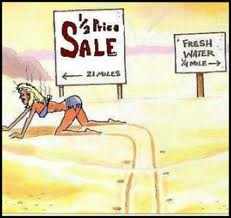
Make it to a Sale On Time
Need I say more?


Multitask
Because we're so good at it


Demonstrate True Kitchen Domination


Alternate Version:
Tell everyone you meet that you can't cook
This way they don't expect culinary mastery
This way we can chat on Facebook
Instead of spending the day in the kitchen


Make the World Laugh


Make a Memorable Exit


Saturday, May 12, 2012

Why I Laugh by Dalai Lama


In the Dalai Lama's book, "My Spiritual Journey," the Dalai Lama explains: "I am a professional laughter... I laugh often, and my laughter is contagious... Thinking only of the negative aspect doesn't help to find solutions, and it destroys peace of mind... You can see the positive side of even the worst of tragedies if you adopt a holistic perspective... if you take the negative as absolute and definitive, however, you increase your worries and anxiety... I have been homeless for half a century...but I have found a large number of new homes throughout the world... The life of exile is an unfortunate life, but I have always tried to cultivate a happy state of mind, appreciating the opportunities this existence without a settled home, far from all protocol, has offered me.... This way I have been able to preserve my inner peace."


Not all belief systems inspire happiness, nonviolence, and the wish to end all suffering. The Dalai Lama states that his religion is simple, it's "Kindness."

Recognizing that the future of humanity depends on our planet, and that the planet's future depends on humanity, the Dalai Lama has cultivated a special relationship with nature and with many peoples around the world.

True global communication is one of kindness and coexistence; finding within oneself a reason to laugh, giggle, and joke, as well as the ability to find humor in the subtlest of forms. This is indeed an artform, one that the Dalai Lama has mastered.

It is often times difficult to find humor in a contemporary materialistic society, difficult to find it within ourselves, and difficult to find it in others - until it is what you're searching for. Then, it is everywhere and in everything.

Authentic smiles, natural giggles, and hearty laughs fill the room with a feeling of freshness. If you want to have and share these experiences, you have to create them within yourself and prepare to make true friends, as laughter and happiness, while creating altruism, is indeed contagious.


Wednesday, May 9, 2012

Raising Funny Kids 12: Nurturing Imagination


One way that we can support a child's imagination is to help them record or otherwise "save" their creative thoughts and ideas. 


Writing for our children, writing to our children, and writing about our children (until they can write) encourages the practice of giving ideas a place for safekeeping. When imagination is honored, creativity flourishes. 


Creativity manifests itself in extreme, complex, positive, and sometimes negative ways. Children with strong imaginations benefit more from hearing praise such as:


"You have a rich imagination." 

"You see the world in exciting ways." 

"You think of extraordinary ideas and tell wonderful stories." 

"You make boring things seem exciting." 

"Thank you for being you... you make being me, all the more pleasurable." 


It's important to nurture creativity in ourselves and in our children. For instance, you could ask your son to draw what he thinks his first car will look like or how cars will look in the future. You could ask your daughter to draw images of her imaginary friends or design a clothing line for her pets. In fact, you could ask both of your kids to make a picture book about their imaginary pets or treasures that they think might be hidden under the rainbow. 


Providing children opportunities for design and invention, relaxation and channeling imagination with stories and guided imagery, and an opportunity to distinguish between the imaginary and the real world offers children with this extra emotional antennae to be more emotionally endowed, making them more capable of finding creative solutions to life's ordinary - and not so ordinary - challenges. 


While many schools and so-called "experts" see such creative endowment as a maladjustment and an interference when it comes to memorizing random pieces of information to produce what society calls a productive, rational life, don't buy into this. 


To define creativity is like depicting the magnificence of the Great Pyramids with a set of Tinker Toys. Creativity is the depth and breadth of feeling that brings the nuance of language and meaning to visible life. Projects serve a shrine for lost thoughts and an opportunity to hold onto what we all sense from early on is a piece of our own humanity.


Intensely creative children bear enormous loads of feelings that accumulate from various fears, hopes, and anxieties - concern about death, love, loneliness, deep caring for others, and excruciating self-scrutiny, as well as the exhilaration in joy and affection. When a child is allowed to express their creativity, their radiance lights up the whole house! When they are separated from this outlet, the weight of the world is on their shoulders. 


If your kids are showing a range of contradictive reactions, it could be that they simply need a creative tug in an artistic direction that allows them to absorb and respond to the demands of the world. Kids don't have the vocabulary and emotional maturity to describe the complexity of emotions they're feeling, but they do have little hands and little fingers that can express their thoughts for them. 


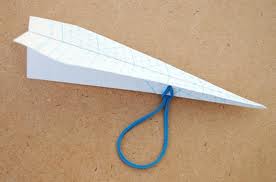
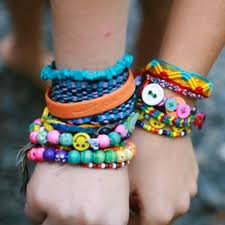
Listen with your own inner creativity and help your child build their self-esteem and sense of self-respect so that they can actualize the intricate wonders they feel and know. It takes some careful listening, a little guidance - and a bit of creativity - so here's a few pics to inspire the power of their possibility (and yours).