Monday, April 23, 2012

Surviving AH-HA-PAUSE


Get Wealthy

Be Wise


Although it is our natural state to manifest 'ah-ha', sometimes ah-ha just isn't flowing in the ah-ha to which we've become accustomed. This is known as ah-ha-pause. 

All of us "do-gooders" in the world experience ah-ha-pause sometime in our lives. I remember when I just started going through ah-ha-pause. I would get hot flashes of brilliance - and yet there would be little or no flow of genius. And then nothing was funny. I would start to laugh and then stop in the middle, just like that. 

I was going through a mid-ah-ha-pause crisis, the beginning of my ah-ha-pause. 

I was 7. 


A 7-year old's life is primarily focused on doing your duties - chores, homework, and personal body care, not to mention being "nice to your little brother."  Personally, I thought that I already did "too much."  

It was this early insight, the belief that I was already "good enough," that led me to go outside and play instead of doing my homework. 

Homework was going to be there for me when I got done, but I was only allowed to play outside until 30 minutes right before dinner.  Think about it. What would you do? 


If you, like me, went out to the playground, you trained your dogmas how to play fetch, run fast, and appreciate the art of dress up at an early age. 


After letting my thoughts float away like balloons into the sky, playing outside felt pretty great. 

Until... I thought about my math sheet. Danger! Do not think about homework while swinging on the monkey bars, you could fall off, land on your wrist, and break it in a million pieces requiring the aid of a cast, which of course, everyone signed, so I guess it wasn't all that bad after all... 


Moving on. 

Despite the fact that my parents were "hip" vegetarians who still enjoyed Mexican food, I grew up in a dysAH-HAsional family. I adopted every stray dogman in the neighborhood. This dogma was the belief that I could help everyone learn how to play and have fun. And if they couldn't come outside to play because they had homework or their parents were just being plain "mean," then fine, I'll go play at the park because there's plenty of dogmas there! 


I really loved roaming the neighborhood (within a 4 block radius) with these old dogmas. You can't imagine what a comfort it was for me to know that whatever happened after school, this old dogma would always be ready and eagerly willing to play! 


To teach an old dogma new tricks, you have to walk it every day after school. You have to walk it through your ah-ha moments, so that one day, when you're in 5th grade and have a state report to do, your dogma understands that you really do need to spend the afternoon at the Library but that you'll walk to and from there with your dogma him all about President Lincoln. 


I never left all my stray dogmas behind. They kept me company, and I kept talking to them so that they could get to know the neighborhood better. After all, each year I was allowed to venture further and further, eventually learning how to drive around the neighborhood park and then ultimately, drive away. 


I bought a very big car so all my dogmas, who wanted to go, could take the journey with me. It took awhile for us to learn new neighborhoods, to figure out where all the pit stops were along the familiar roads and how to look out for conveniently located gas stations with clean bathrooms in unfamiliar territory. 


And that's the story of how I made it through ah-ha-pause at such an early age. It wasn't one giant ah-ha moment, but rather a series of ah-ha's that helped me and my stray dogmas deal with a dys-AH-HAsional family who didn't always appreciate my ah-ha "we should skip school today" attitude "and go snow skiing instead" or "play at the park" philosophies.


Next, 5 easy guidelines you can follow 
to make it through your ah-ha-pause


Sunday, April 22, 2012

40 Pieces of the Happiness Puzzle - Part 5

Happiness Puzzle

Being happy is a state of being most everyone wants to experience, though not everyone is skilled at reaching and prolonging this state. There are a range of ways to experience feelings of happiness, with certain methods being better for some then others. 

This is the 5th post in a series of 40 on the techniques you can employ to experience and prolong the feeling of happiness. The first post was on Sensory Hedonism, followed by Achievable Challenges, Serving Others, and Expertise. 

#5: Fake it 'till you make it

"Fake it 'till you make it" (also called "act as if") is an assumption principle and common expression that means imitate confidence until experience and success generates genuine confidence. The main point is to not get stuck in a self-fulfilling prophesy or negative feedback loop where we allow negativity to strengthen negative beliefs that in turn, result in negative actions. 


The "fake it 'till you make it" technique is highly effective for combating depression and rigid thinking. The idea is to go through the routines of daily life as if one were enjoying them, despite the belief that would  otherwise label this activity as "forced." 

Continue acting this way until the feeling of happiness arises. This is an example of a positive feedback loop, a process that mimics the effects of energie matching. 


With our increasing dependence on technology, it is worthy to note that uncontrolled positive feedback can have destructive results.  


Electronics gradually increase in temperature, in turn releasing energie that further increases temperature. Some processes and reactions that release energie from the system, usually in the form of heat, but also in the form of light (spark, flame, explosion), electricity (battery), or sound (burning hydrogen), if sustained, and due to constant pressure, can actually modify and transform nearby systems. Organic material is particularly susceptible to this type of reaction because of how our bodies behave in response to different wavelengths of light. Living cells depend on feedback loops. Positive feedback can amplify a signal, whereas negative feedback can impede it. 


Positive thinking is therapeutic. It is a reasonable and constructive thought pattern. Negative thinking tends to be irrational and excessive, until offset by a positive thinking response. To avoid negative self-talk, try the following exercises: 


Interacting as if you are happy, being active and cheerful and getting out and doing happy things are practical ways you can jumpstart your inner happiness. The Double Dutch jump ropers in the below video are performing a highly rehearsed routine, however, within a very short period of time, their reactions to the movements notably raises their enthusiasm and by the end, they're all smiling. 


Something as seemingly simple as our posture can affect our mood. Sitting up straight and adopting an open or relaxed body language position allows your whole body communicate happiness. Moving around as if you're happy, with a little spring in your step and with a relaxed swinging of the arms, physically aligns your body and makes it more susceptible to happy feelings. 


Speaking clearly and using positive words brings the verbal into alignment. Speaking slightly faster and varying the pitch of your voice avoids monotone sounds, which can give off negative impressions. 

Depressed speech directly affects the quality of communication you share with others. Also, referring to yourself and others equally aids greatly in keeping conversations relaxed and enjoyable for everyone. 


Being pleasant to others, nodding in agreement, laughing at their jokes, clicking "like" on their Facebook posts, and leaving positive comments on this blog, all promote the happiness of others when in your presence. This reciprocal social effect can then be carried forward by all participants into other relationships. 


Avoiding destructive criticism of others and of ourselves allows us to step outside negative feedback loops so that a smile, despite whether or not it if arrived forced, eventually unclenches, resulting in a relaxed, joyful smile that all can enjoy. 


When we act contrary to our beliefs, we feel the tension of conflict between our beliefs and actions. As a result, we instinctively gravitate to resolve this tension of conflict. Choosing to change what we believe is more easily jumpstarted by changing how we act. 


Daniel Gilbert, Professor of Psychology, Harvard University


People who act happy, even when they are not, end up feeling happier. Criticizing someone for "faking it" not only affects their ability to sustain their happiness, it diminishes your own. 

In allowing ourselves to be happy, we also have to allow it, support it, and promote it for others. Helping to bring out the best in others is another way (positive empathy) we can sustain our own. 

Another word for this is friendship. 


Saturday, April 21, 2012

The Art of Humor II


Comedians of antiquity told tales, sang songs, and imparted words of wisdom. There is a profound distinction between those comedians and the comedians of modern times. The greatest accomplishment of ancient comedians had been to build the structures of comedy, emphasizing practicality and concreteness, a common thread highlighted in folklore and tradition. By contrast, modern comedians are renowned for their sound minds and capacity to rectify the course of comedy if they deemed necessary. 


In the nineteenth century, in an effort to understand the intellectual and spiritual development of mankind, comedy began focusing on the concept of culture as well as the notion of tradition. Pertinent to comedy is joking. In order to appreciate the position of comedians and comedy, one has to understand the struggle of modern-day comedians to steer comedy away from concreteness toward the abstract. 

Life is like a comedy.
Don't take anything too seriously or too personally,
learn to laugh. Lighten up! 

Light is energie and energie is life,
therefore enlightenment must be when we've lightened up.
Think about it. Life is pretty funny. 


Concreteness is the practical side of comedy. The obsessive fixation of the mind on practices and techniques, the unwarranted influence over people. All of these were in the realm of comedians of the past.


The abstract is the search for freedom, freedom to perceive, without obsessions, all that is humanly possible. I say that present-day comedians seek the abstract because they seek freedom; they have less interest in concrete gains. There are no social functions for them, as there were for comedians of the past. So it's rare you'll catch them in the limelight of comedy. 


It is not that the past doesn't have value for modern-day comedians. It's the taste of that past that these comedians do not like. I personally detest the darkness and morbidity of the mind. I like the immensity of thought. However, regardless of my likes and dislikes, I have to give due credit to the comedians of antiquity, for they were the first to find out and do everything we know and do today (in comedy). 


Their most important attainment was to perceive the energie of the audience. This insight was of such importance that it was turned into the basic premise of comedy - to make someone laugh. Nowadays, after lifelong discipline and training, comedians do acquire the capacity to perceive the energie of the audience, a capacity they call working the crowd. 


To perceive the energie of the audience, you have to separate the social part of perception, perceiving instead the essence of the audience. Whatever we're perceiving is energie, but since we can't directly perceive energie, we process our perception to fit a mold. This mold is the social part of perception - tradition and culture - which you have to separate. 


The social part of perception reduces the scope of what can be perceived and makes us believe that the mold into which we fit our perception is all that exists. Changing our perception at the social base requires letting go of the notion that the world is made of concrete objects. Society makes a serious and fierce effort to guide us to perceive the world the way we do. 

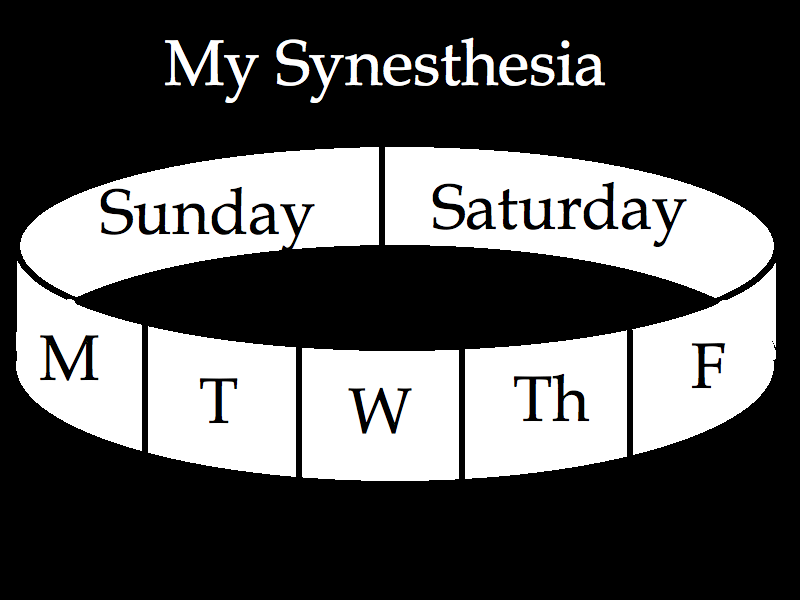
As a synesthete, sounds and letters produce both rounded and sharp inflections in my body, to which my mind reacts. I see everything as energie. The social base of our perception should be the physical certainty that energie is all there is. There's conscious effort required in seeing energie as energie, but doing so would put both alternatives at our fingertips. 


Living in such a fashion is a story for another day... 


Mathematics Rhyme for Kids


Twinkle, twinkle
Little Star


Circumference equals
2 Pi R


Up above the world so high
Heisenberg's limit's h upon 4 Pi


Friday, April 20, 2012

History of the Middle Finger

Conflicts have long since given rise to popular culture. Thanks largely in part to the long-standing conflict between the English and the French, we now know where one popular expression originated...


Before the Battle of Agincourt in 1415, the French, anticipating victory over the English, proposed to cut off the middle finger of all captured English soldiers. Without the middle finger it would be impossible to draw the renowned English longbow, impeding the ability to fight in the future. 


This famous English longbow was made from the native English Yew tree, and the act of drawing the longbow was known as "plucking the yew" or "pluck yew". 


Much to the bewilderment of the French, the English won a major upset and began mocking the French by waving their middle fingers at the defeated French, saying, "See, we can still pluck yew!" 


Since 'pluck yew' is difficult to pronounce - the difficult consonant cluster at the beginning has gradually been changed to a fricative "F", and thus the words often used in conjunction with the one-finger-salute.


Note: The pheasant feathers on the arrows used with the longbow resulted in the coloquial expression "giving the bird".  


And yew thought yew knew every plucking thing! 


Since the days of ancient Greek comedy, κατάπυγον (katapugon, from kata, "downwards" and pugē - πυγή, "rump, buttocks) has been a reference to the middle finger to insult another person. In Ancient Roman writings the finger was referred to as the digitus impudicus (impudent finger). 


In Bruce J. Malina's, The New Testament World: Insights from Cultural Anthropology, 3rd Ed. (Louisville: Westminster John Knox Press, 2001), extending the finger was one of the many methods used to divert the ever-present threat of the evil eye offense. 

It is believed that the gesture reached the United States via Italian immigrants. The earliest known documentation of this occurrence comes from a photograph taken of the Boston Beaneaters giving the finger to their rival, the New York Giants. 

Baseball pitcher, Old Hoss Radbourn, pictured (back row, far left) giving the finger.
First known photograph of the gesture. 


History has given rise to a number of obscene gestures, with "the finger" being called "the universal sign of disrespect."  


For more information on offensive gestures, consult Roger E. Axtell's, Gestures: The Do's and Taboos of Body Language Around the World.